Canada's $1 billion ban isn't the one to watch

| |||||||||||||||
| |||||||||||||||
Morning briefing
A tariff is a price. A ban is a wall.By Paul Haull. 6-minute read. | |||||||||||||||
|
Good morning. At 12:01 this morning, a list of Canadian goods stopped being expensive and started being unavailable. Most people will read the headline, shrug, and move on. I want you to read it the way a professional reads a balance sheet, because this one tells you something you'll use for years. | |||||||||||||||
| |||||||||||||||
|
1 of 3 A tariff is a toll. A ban closes the road.A tariff is a tax paid at the border. The importer pays it, then usually passes some or all of it on to you. The goods keep coming. They just cost more. And because a tariff is a number, it can be negotiated. Fifty percent can become thirty, then ten. A ban is different in kind, not just in size. Supply drops to zero. There's no price to negotiate, only a door that's open or shut. As one trade expert told CBC this week, bans tend to be very hard to take back once they're in place. | |||||||||||||||
Illustration. Real prices depend on the product and the store. | |||||||||||||||
|
Notice the last row. Under a ban, the bottles already on American shelves become a shrinking pile. Whoever owns that pile, the store or the dealer, now holds something that can't be replaced. That's where the pricing power moves. | |||||||||||||||
| |||||||||||||||
|
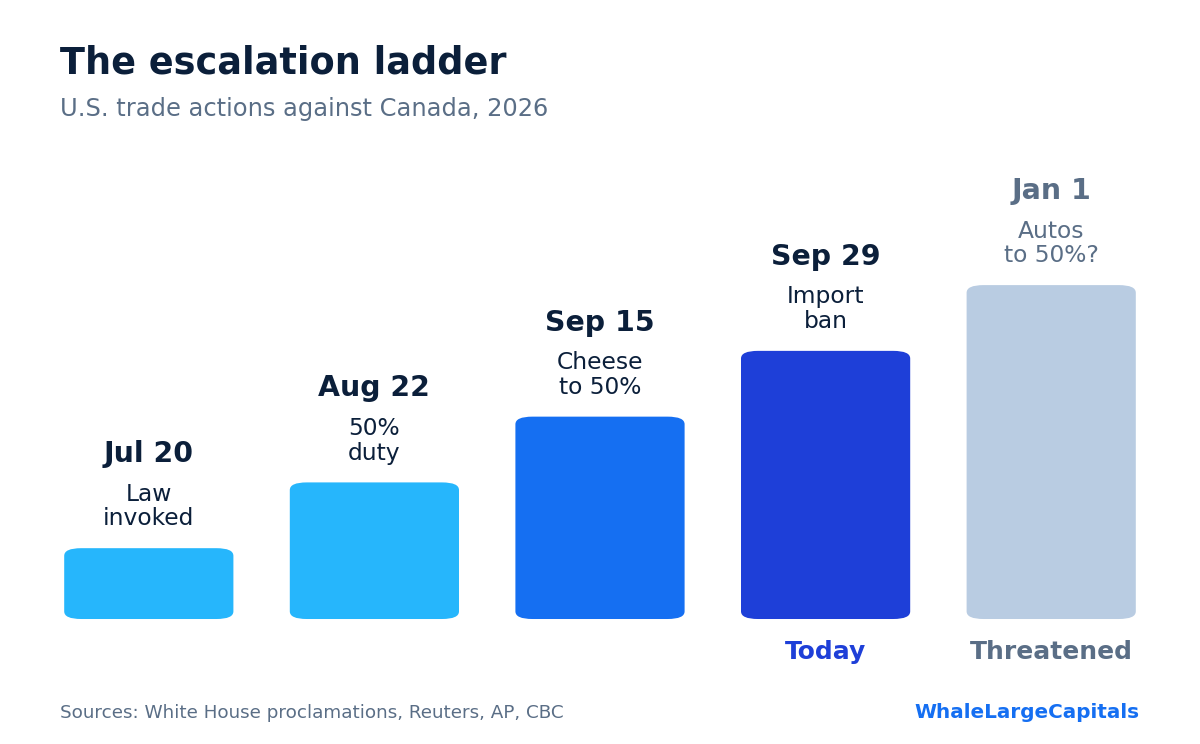
2 of 3 Trade fights climb a ladder, and the ladder is publishedNone of this came out of nowhere. Each step was announced in writing, weeks ahead. The ban itself was announced on September 8 and took effect three weeks later. Here's the whole climb. | |||||||||||||||
| |||||||||||||||
| |||||||||||||||
|
And the next rung is already on paper. A threat to raise the tariff on Canadian autos from 25% to 50% on January 1 remains in effect, according to Reuters. Cars and car parts cross that border constantly. If that rung arrives, you'll feel it far more than anything banned today. | |||||||||||||||
|
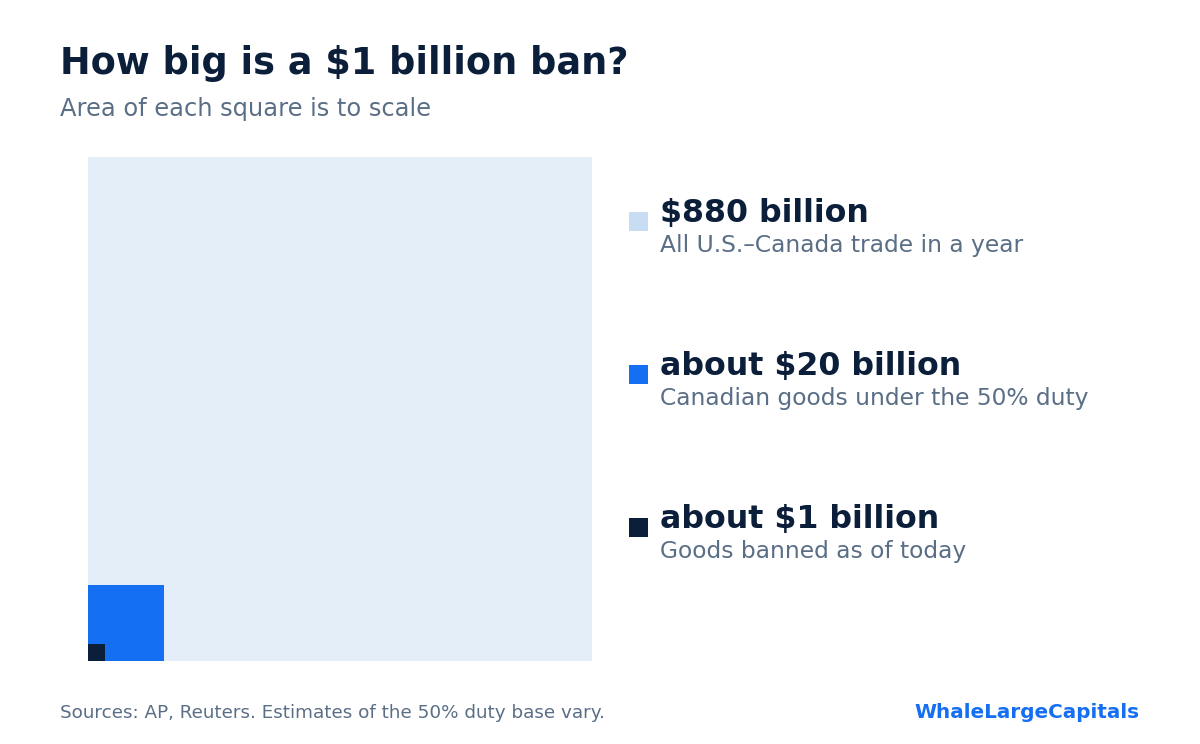
3 of 3 Size the threat before you react to itAuditors have a word for this: materiality. Before you worry about an item, you ask how big it is compared with the whole. A $1 billion headline sounds enormous. Put it next to the whole relationship. | |||||||||||||||
| |||||||||||||||
|
For the economy, this is a ripple. Scotiabank's head of capital markets economics expects the effect to be negligible, since Canada ships very little dairy and few motorcycles south. But materiality works both ways. Small for the country can be large for you, if your favorite whisky or your next motorcycle happens to be on the list. Judge the headline by your own balance sheet, not the nation's. | |||||||||||||||
Test yourself: who moved up the line?Every ban creates winners and losers on the same day.
| |||||||||||||||
The Protocol
Four moves to make this week
| |||||||||||||||
| |||||||||||||||
The Boardroom
A question I get a lot: do tariffs cause inflation?Here's the distinction to learn. A tariff raises the price of specific goods once. That's a step up in the price level, not the same thing as prices rising month after month. Economists still argue about how much of each tariff reaches the shelf, and the honest answer varies by product. Where it gets serious is when steps keep stacking: a tariff, a counter-tariff, a ban, the next rung. Each one alone is a step. A long staircase starts to look like inflation from where you're standing. | |||||||||||||||
|
That's it for this morning. Next time a headline says "ban" or "tariff," ask the three questions: which one is it, which rung are we on, and how big is it on your own balance sheet. Paul Haull | |||||||||||||||