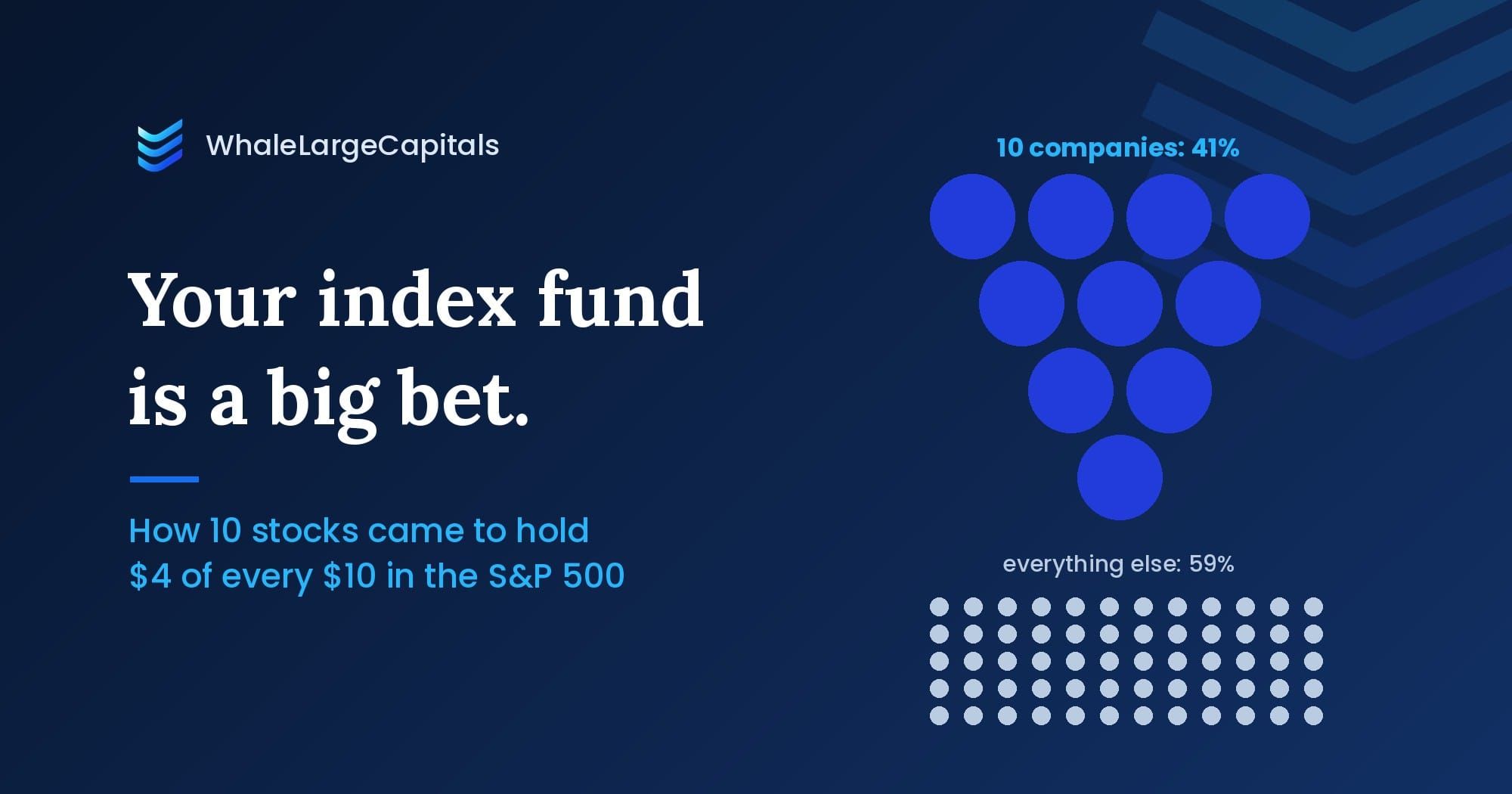
$4 of every $10 in your index fund sits in 10 stocks.

| ||||||||
| ||||||||
Morning briefing
Your index fund is a bigger bet than it looks.By Paul Haull. 6-minute read. | ||||||||
|
Good morning. On Thursday, a newspaper report about one company that doesn't even trade on the stock market knocked the Nasdaq down about 1.3%. If you own a plain S&P 500 index fund, the kind most of us were told is the safest, most diversified thing you can buy, you felt it too. Today I want to show you why, and what the fund's own weighting rules say about where your money really sits. | ||||||||
| ||||||||
|
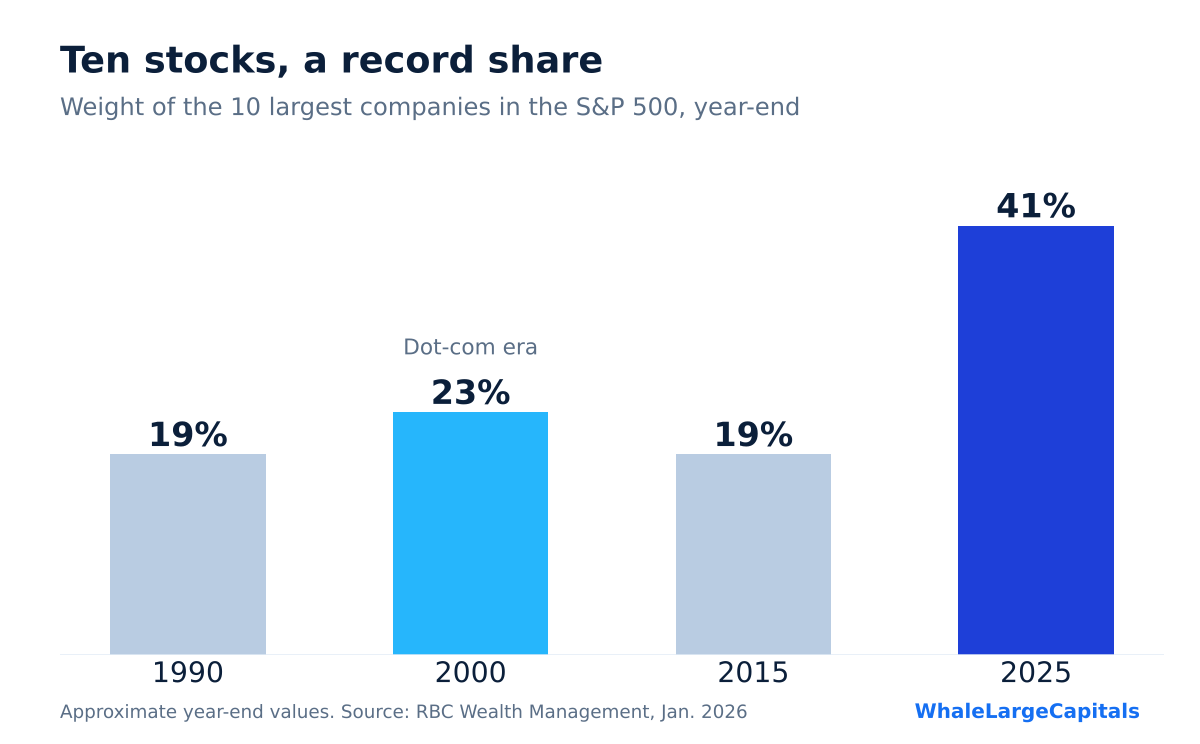
1 of 3 The bigger it gets, the more you ownThe S&P 500 isn't 500 equal slices. It's weighted by market value: the bigger the company, the bigger its share of your fund. When a giant stock rises, the index automatically puts more of your money into it. Nobody decides this. It's the rule. For most of history that rule produced a fairly balanced fund. Lately it hasn't. | ||||||||
| ||||||||
|
RBC Wealth Management, which compiled those figures, put it plainly: more than $40 of every $100 invested in the index flows into just ten companies. Those same ten were expected to earn about 32% of the index's profits in 2025. You're paying a premium for them, and holding more of them than their earnings alone would suggest. | ||||||||
| ||||||||
|
2 of 3 The index is up. The average stock isn't.Here's the clearest sign of how lopsided things have become. Compare the regular index with the equal-weight version, which gives each company the same slice. According to Inc., the equal-weight index has lost about 30% of its value relative to the regular one since 2015, and about a quarter since the end of 2022. This week it sat roughly 6% below its 52-week high while the regular index was within 1% of its own. In plain terms: a handful of giants are carrying the scoreboard. That's fine while they keep winning. It also means the fund many retirees treat as "the whole market" now rises and falls with a narrow group of companies, many of them tied to the same artificial intelligence boom. Is that a bubble? RBC's own answer is careful, and I agree with it: "Elevated concentration alone is not sufficient evidence of a bubble." It is, however, a risk you should choose on purpose rather than by default. | ||||||||
| ||||||||
|
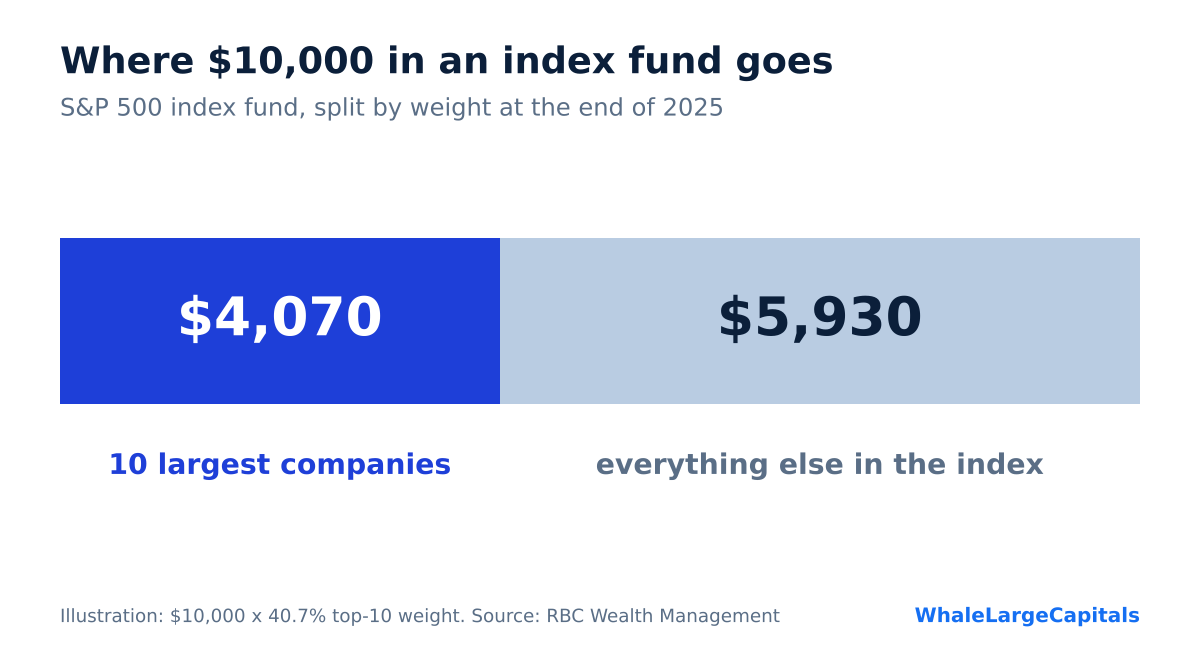
3 of 3 What Thursday actually showed youOpenAI isn't in the S&P 500. It's a private company. Yet a single report about its revenue moved your fund, because so much of your fund rides on the companies that sell to it: chipmakers, cloud providers and the firms building data centers. Here's what that concentration looks like in dollars. | ||||||||
| ||||||||
|
And many people hold the same giants two or three times over without knowing it: once in an S&P 500 fund, again in a "growth" or technology fund, and again in a target-date fund inside a 401(k). Each fund looks reasonable alone. Stacked together, they can add up to a much bigger bet than you'd ever make on purpose. | ||||||||
Test yourself: who moved up the line?Concentration rewards some investors and quietly exposes others.
| ||||||||
The Protocol
Four moves to make this week
| ||||||||
| ||||||||
The Boardroom
A question I get a lot: should I sell my index fund?Usually not. A low-cost index fund is still one of the best tools an individual investor has. The point isn't to abandon it. It's to stop treating it as a complete answer. Think of it as one holding with a known tilt toward the largest companies. Then build around it on purpose: bonds or cash for what you'll need in the next few years, and other kinds of assets if you want balance. Know the bet you're making. That's the whole difference between owning a fund and being owned by one. | ||||||||
|
That's it for this morning. Have a good weekend, and this weekend, look up the top ten holdings of the funds you own. It takes ten minutes and tells you more than any market headline. Paul Haull |