Oil fell 8% in a day. Here’s when your gas bill will notice.

| ||||||||
| ||||||||
Morning briefing
Oil fell 8% in a day. Here's when your gas bill will notice.By Paul Haull. 6-minute read. | ||||||||
|
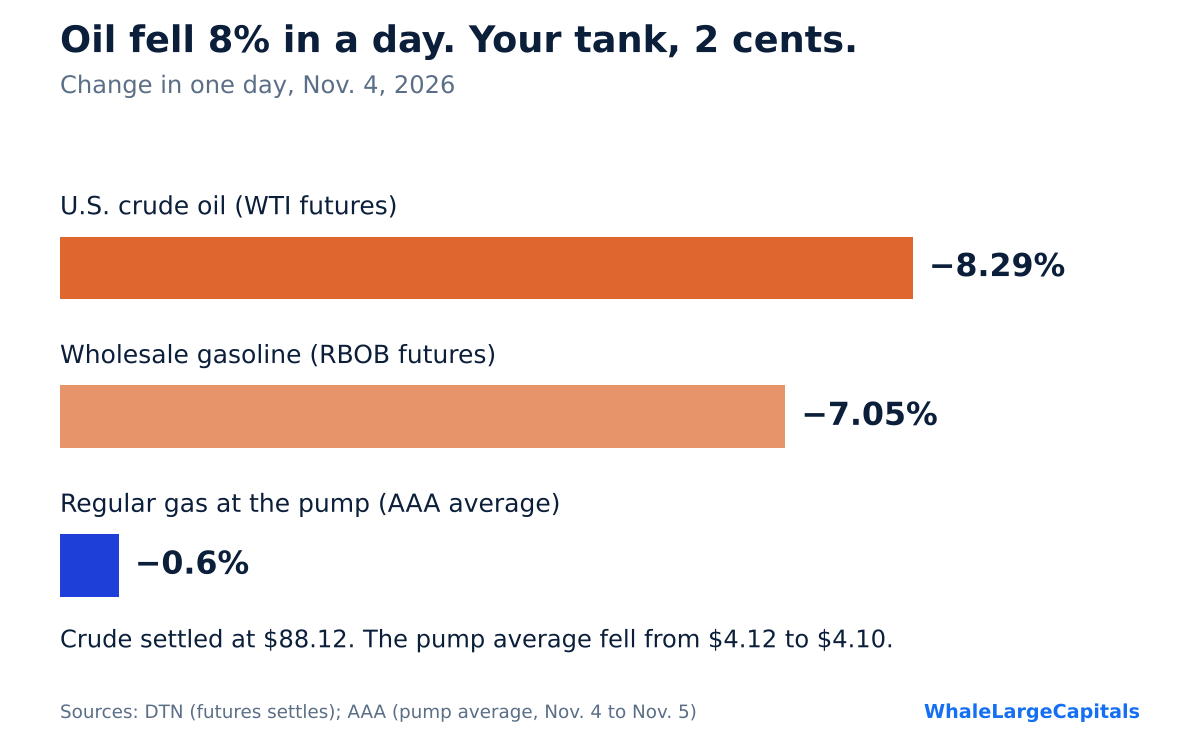
Good morning. Yesterday, U.S. crude oil fell more than 8%, to $88 a barrel. Traders are betting the war with Iran could end sooner, and oil tankers are already moving through the Strait of Hormuz at close to pre-war levels. This morning, the national average for a gallon of regular gas is $4.10. That's two cents lower than yesterday. This morning I'll explain why the pump moves so much slower than oil, how much relief is realistically coming, and the one fuel bill that may not get cheaper this winter. | ||||||||
| ||||||||
|
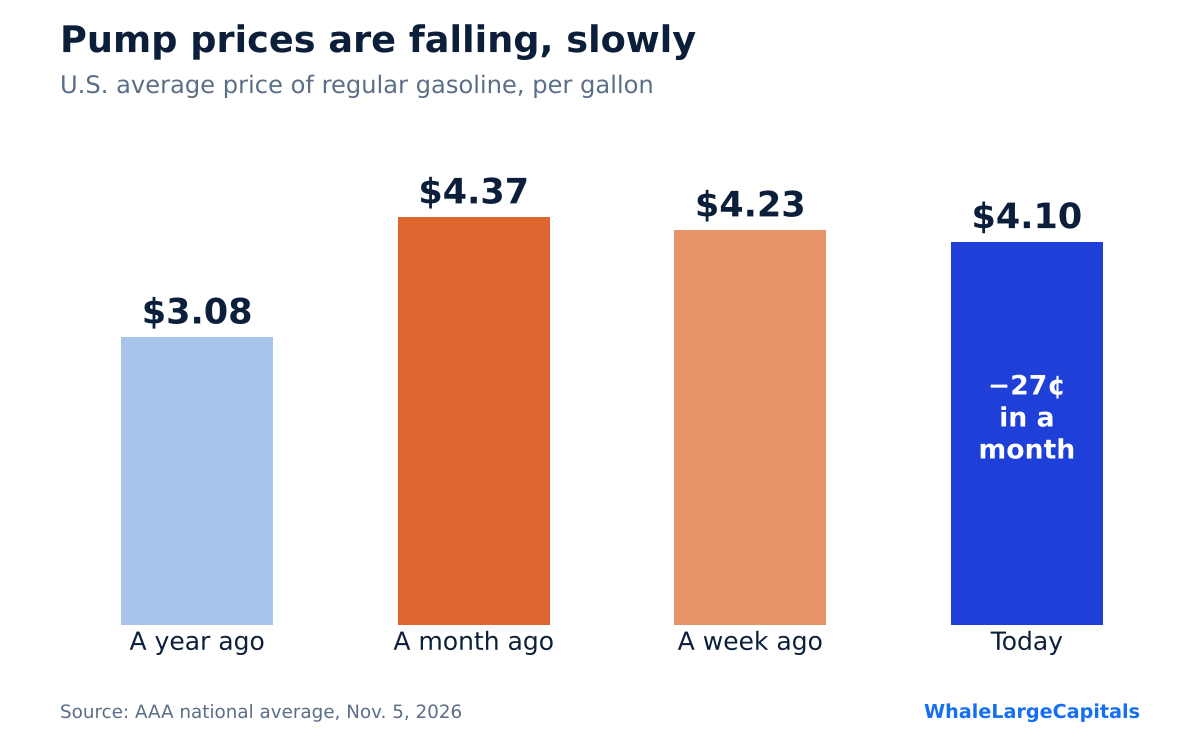
1 of 3 The relief has already startedGas prices have been coming down for about a month. In early October, AAA said prices were the highest they had ever been for that time of year. Since then, the national average has fallen about 27 cents, helped by the switch to cheaper winter-blend gasoline and by oil easing from above $100. | ||||||||
| ||||||||
|
At $4.10, a family that buys 15 gallons a week spends about $61.50 per tank. That's about $4 less than a month ago, and about $15 more than a year ago. | ||||||||
| ||||||||
|
2 of 3 Why the pump moves slower than oilOil can drop 8% in an afternoon. Your local station changes its sign when it buys its next delivery, and stations still have tanks of fuel they paid more for. So pump prices usually follow oil with a delay of days to weeks. There's also simple math. A barrel holds 42 gallons. Yesterday's $7.97 drop in crude works out to about 19 cents a gallon. Wholesale gasoline fell about 21 cents. If those lower prices hold, that's roughly the size of the cut that could reach the pump over the coming weeks. It won't be 8%. | ||||||||
| ||||||||
|
And it isn't locked in. Oil steadied early Thursday, and prices can swing back quickly if peace talks stall. The bet traders made yesterday is about the future. Your next fill-up depends on whether that bet holds. | ||||||||
| ||||||||
|
3 of 3 The fuel bill that may not easeDiesel and heating oil come from the same part of the barrel, called distillates. U.S. stocks of distillates fell to 99.3 million barrels last week, the lowest since 2003. Diesel at the pump hit a record $6.53 a gallon in September and is still $6.26. That matters even if you drive a gas car. Diesel moves the trucks that deliver groceries and packages, so it feeds into prices on store shelves. And if you heat your home with oil, tight supplies heading into winter are a risk to watch. Wholesale diesel did fall 7% yesterday, but from a much higher starting point. For investors, yesterday was a reminder of how fast energy reverses. The energy sector was the S&P 500's worst performer on Wednesday while most others rallied. If you added energy stocks this year to hedge high prices, that hedge works in both directions. | ||||||||
Test yourself: who moved up the line?Cheaper oil helps some people right away, and others later.
| ||||||||
The Protocol
Four moves to make this week
| ||||||||
| ||||||||
The Boardroom
A question I get a lot: why do gas prices go up like a rocket and down like a feather?It feels that way, and economists even have a name for it: “rockets and feathers.” When oil jumps, stations raise prices quickly so they can afford their next delivery. When oil falls, there's less pressure to cut, and each station waits to see what competitors do. Competition is what eventually brings prices down. That's why comparing stations matters most in weeks like this one. The station that cuts first is the one that wins your business, and every driver who shops around speeds up the drop for everyone. | ||||||||
|
That's it for this morning. Tomorrow brings the October jobs report. Until then, enjoy the slightly cheaper fill-up, and put the savings somewhere they'll still be next month. Paul Haull |