Your tech fund just hit its third correction this year. Here's what not to do.


| ||||||||
| ||||||||
Morning briefing
Your tech fund is in a correction. Here's what not to do.By Paul Haull. 6-minute read. | ||||||||
|
Good morning. On Monday, the Nasdaq-100, the index of the biggest non-financial companies on the Nasdaq and the one behind many popular tech funds, closed more than 10% below its record. That's what Wall Street calls a correction. It's the third one this year. On Tuesday, chip stocks bounced, and overnight futures swung sharply as election results came in. If your 401(k) or IRA leans on tech, this morning is about what a correction means, and the mistakes that cost investors the most in weeks like this. | ||||||||
| ||||||||
|
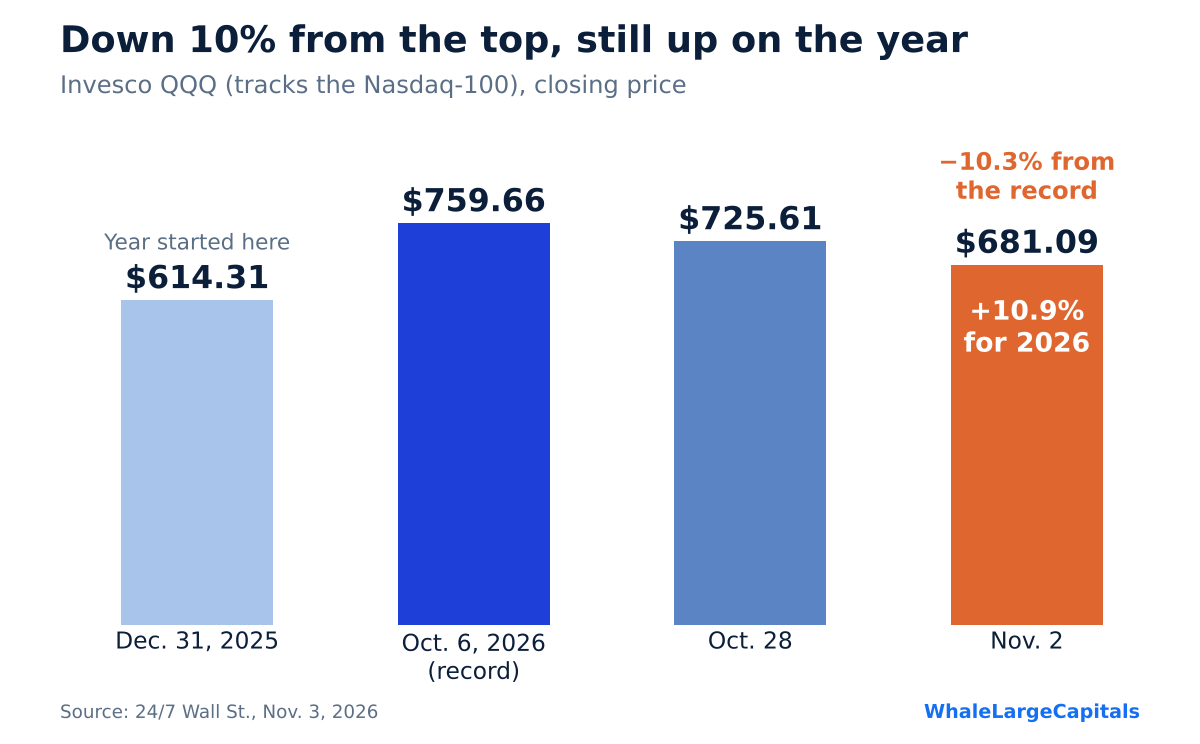
1 of 3 What a correction is, and isn'tFINRA, the brokerage industry's regulator, defines a correction as a drop of at least 10% before prices resume their trend. A bear market is a deeper fall: generally 20% or more in a broad index. So far, this is the first, not the second. It also helps to look at where the index started the year. Invesco's QQQ, the largest fund that tracks the Nasdaq-100, is down 10.3% from its October high. It's still up 10.9% for 2026. Investors who bought in January are ahead. Investors who bought at the top in early October are the ones feeling it. | ||||||||
| ||||||||
|
None of this means the fall is over. It means a 10% drop, by itself, is a normal part of owning stocks, especially tech stocks, and not a signal on its own. | ||||||||
| ||||||||
|
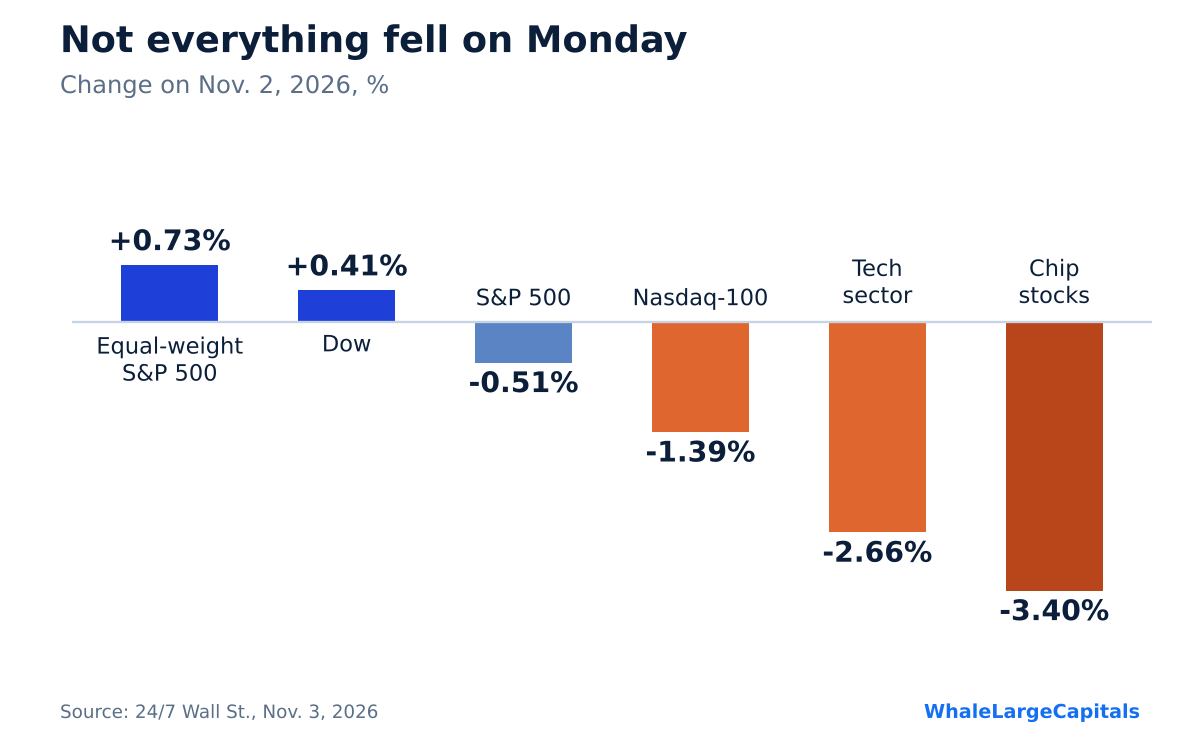
2 of 3 A tech correction, not a market crashMonday looked very different depending on what you own. The Nasdaq-100 fell 1.39%, and chip stocks fell 3.4%. But the Dow rose, and the equal-weight S&P 500, which gives every company in the index the same weight instead of favoring the giants, gained 0.73%. Seven of the S&P 500's 11 sectors rose. | ||||||||
| ||||||||
|
This is what diversification looks like on a bad day. The pain was concentrated in the stocks that led the market up. If your retirement money is mostly in a broad index fund, your losses this week are smaller than the headlines suggest. If it's mostly in a tech fund, they're bigger. | ||||||||
| ||||||||
|
3 of 3 Three corrections in one yearThis year, the Nasdaq-100 also closed in correction on March 27 and on July 29. Both times, it went on to set new records. That's why it's still up for the year despite three 10% drops. Two recoveries don't guarantee a third. The worry now is more specific: whether companies spending hundreds of billions on AI will earn it back. That question won't be settled this week. Meanwhile, the 10-year Treasury yield is near 4.9%, which makes bonds and cash a real alternative for money you can't afford to see drop. The honest answer is that nobody knows whether this correction ends at 10% or keeps going. What you can control is whether a fall from here would force you to sell. | ||||||||
Test yourself: who moved up the line?In a correction, the plan you made beforehand decides where you stand.
| ||||||||
The Protocol
Four moves to make this week
| ||||||||
| ||||||||
The Boardroom
A question I get a lot: should I wait until things calm down to invest?It sounds sensible, but markets rarely send a signal that the worry is over. By the time things feel calm, prices have usually already moved. That's why this year's rebounds caught so many people on the sidelines. If you have a lump sum and the swings make you nervous, there's a middle path: invest it in equal pieces over a few months. You won't hit the bottom, but you won't put it all in at the top either. And for money you invest from every paycheck, the answer is simpler: keep going. | ||||||||
|
That's it for this morning. Expect another jumpy day as markets digest the election results and a fresh round of earnings, with the October jobs report still to come on Friday. Look at your accounts once, check your plan, and then get on with your day. Paul Haull |