America added 165,000 jobs. So why is it taking longer to find one?

| ||||||||
| ||||||||
Morning briefing
165,000 new jobs. So why is it taking longer to find one?By Paul Haull. 6-minute read. | ||||||||
|
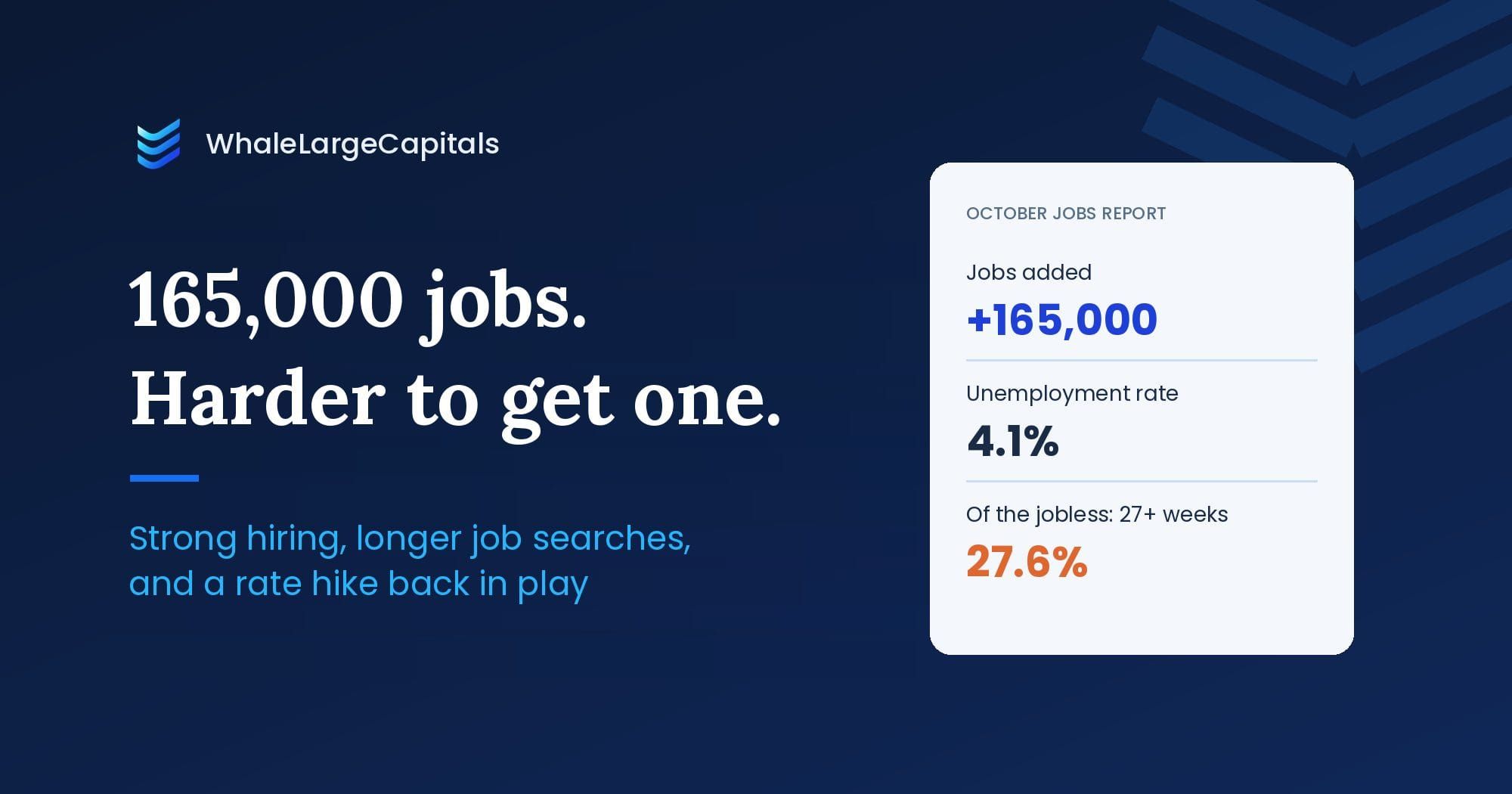
Good morning. Friday's jobs report was the strongest in months. Employers added 165,000 jobs in October, more than twice what economists expected, and the unemployment rate dipped to 4.1%. Stocks steadied after a brutal Thursday. But two numbers deeper in the report tell a more complicated story: people who lose a job are staying out of work longer, and a strong economy makes a December rate hike more likely. This morning I'll walk through what that means for your career and for your debts. | ||||||||
| ||||||||
|
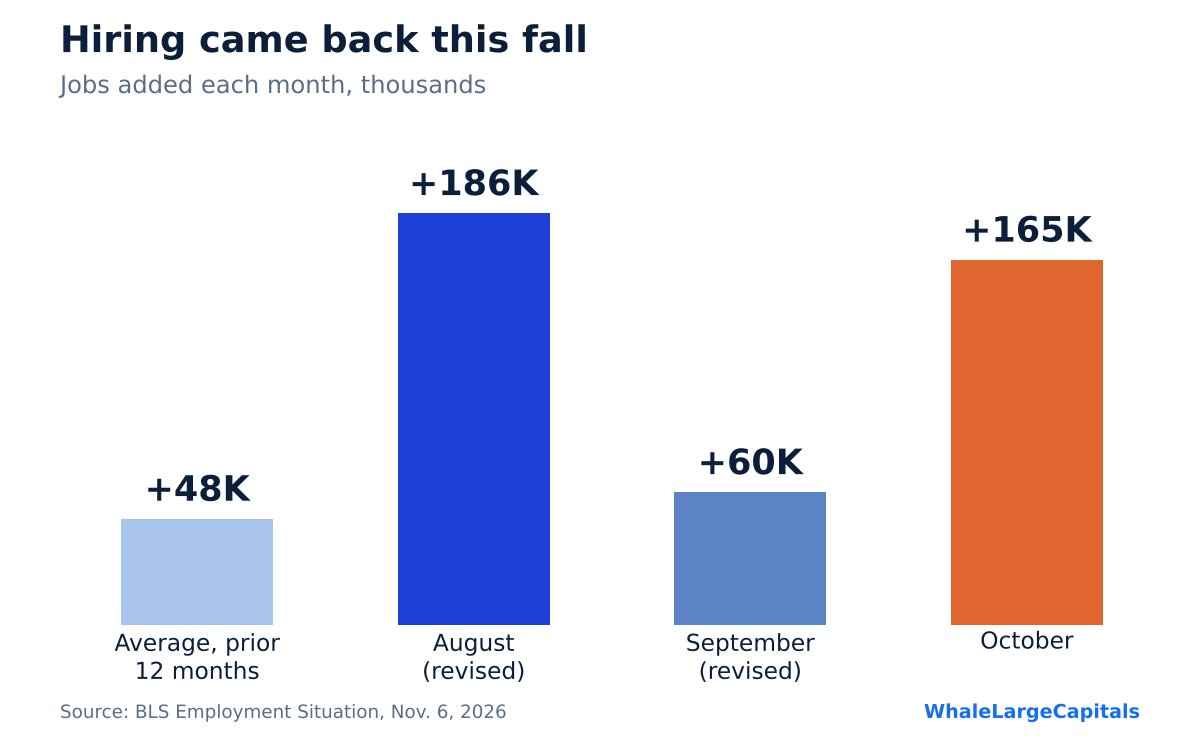
1 of 3 Hiring is backFor most of the past year, job growth was thin, averaging about 48,000 a month. This fall, it picked up. August, after revisions, added 186,000 jobs. October added 165,000. The gains were broad. Professional and business services added 70,000 jobs, health care 42,000, transportation and warehousing 25,000, and manufacturing 19,000. One strategist called the report “a strong rebuttal to fears that the economy is heading into a meaningful slowdown.” | ||||||||
| ||||||||
|
For anyone with a job, that's reassuring. Employers that are adding staff are less likely to cut it, and average pay up 3.1% in a year is a solid gain. | ||||||||
| ||||||||
|
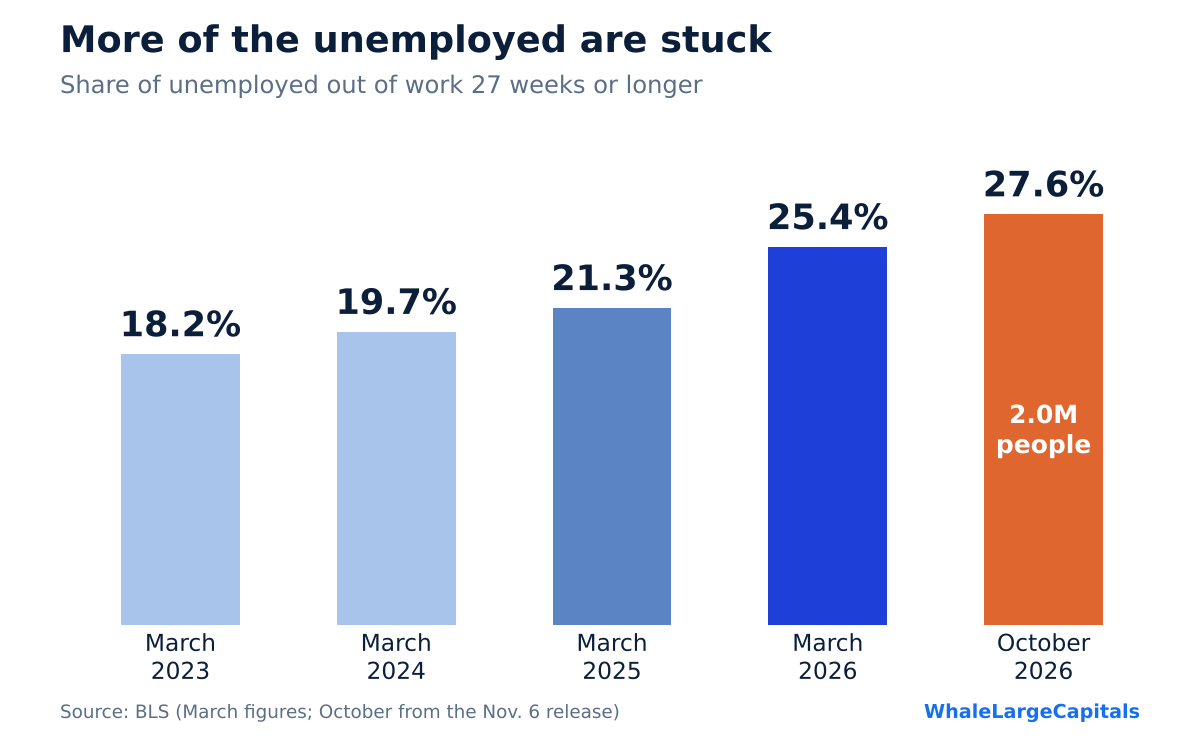
2 of 3 But the search is getting longerHere's the number that didn't make the headlines. More than a quarter of unemployed Americans have been looking for at least six months. In March 2023, that share was 18.2%. By March this year it was 25.4%. Now it's 27.6%. | ||||||||
| ||||||||
|
What does that mean in practice? Companies are hiring, but not quickly, and not always for the jobs people lost. If you're laid off from a mid-career role, the gap until the next paycheck may be longer than it was a few years ago. That's the risk to plan for, even in a strong report. | ||||||||
| ||||||||
|
3 of 3 Good news for jobs, bad news for borrowersStrong hiring and faster pay growth give the Federal Reserve more reason to raise rates to keep inflation in check. After Friday's report, futures markets put the odds of a December rate hike at about 77%, up from 67% a week earlier. The Fed meets on Dec. 8 and 9. A quarter-point hike would lift its target range to 4% to 4.25%. If it happens, you'll feel it quickly on anything with a variable rate: credit cards, home equity lines of credit and adjustable-rate loans. Savers would see the other side, as rates on high-yield savings accounts tend to follow the Fed. Inflation data due this week could still change the math. For now, plan as if rates are more likely to rise than fall before the end of the year. | ||||||||
Test yourself: who moved up the line?The same report is good news for some households and a warning for others.
| ||||||||
The Protocol
Four moves to make this week
| ||||||||
| ||||||||
The Boardroom
A question I get a lot: is this a good time to switch jobs?Partly. Employers are hiring, and pay is rising, so if you get an offer, you're likely negotiating from a decent position. Fields like health care and professional services are adding the most jobs. But the long-term unemployment numbers are a warning against quitting first and searching later. Line up the new job before you leave the old one. The market is good for people who are already employed. It's much harder for people who aren't. | ||||||||
|
That's it for this morning. It's a big week, with fresh inflation numbers that will shape the Fed's December decision. Whatever they show, a bigger cushion and less variable-rate debt will serve you well. Paul Haull |