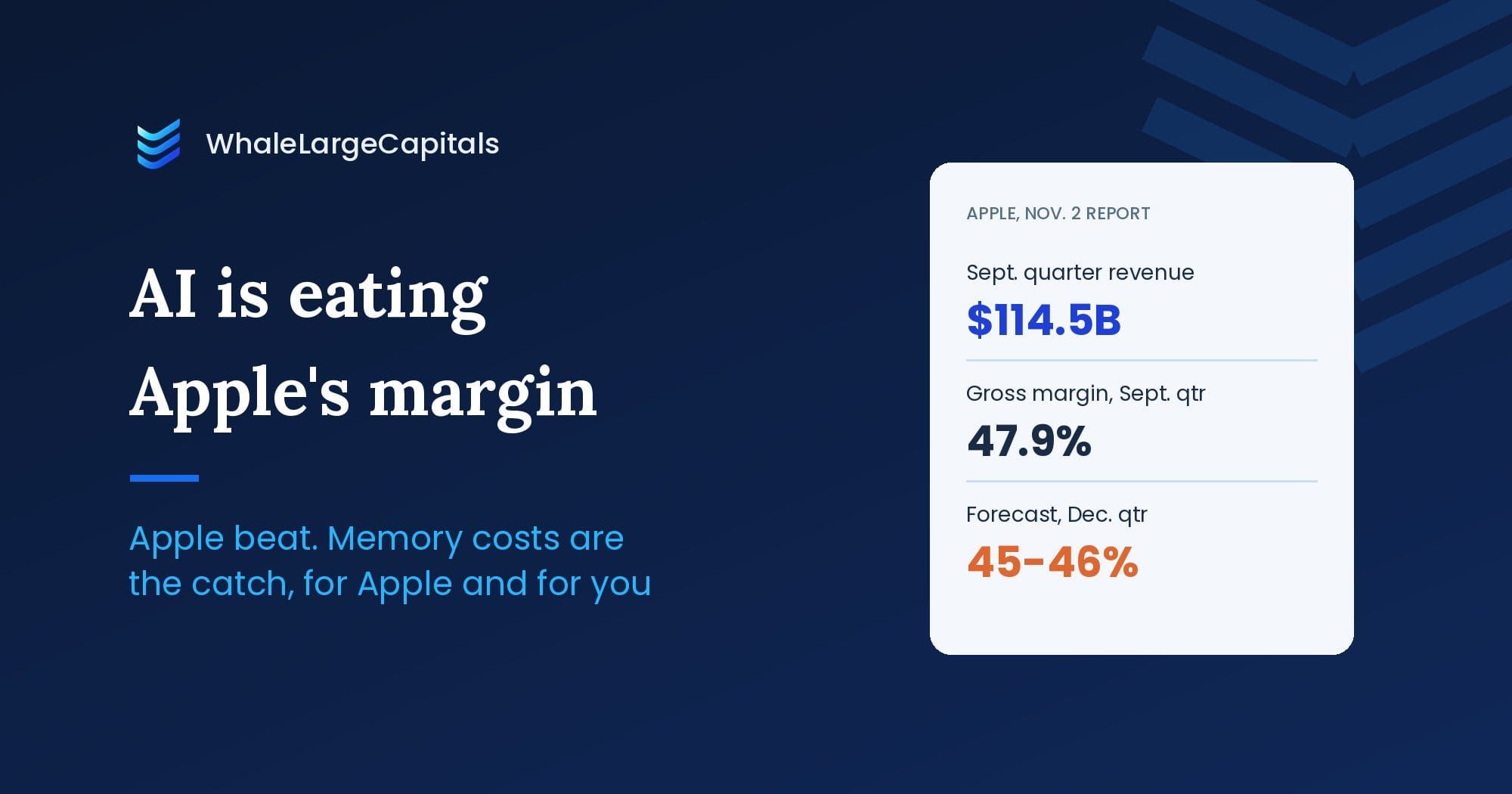
Apple just had a record quarter, but AI is eating into its margin.

| ||||||||
| ||||||||
Morning briefing
Apple had a record quarter. The AI memory crunch is the catch.By Paul Haull. 6-minute read. | ||||||||
|
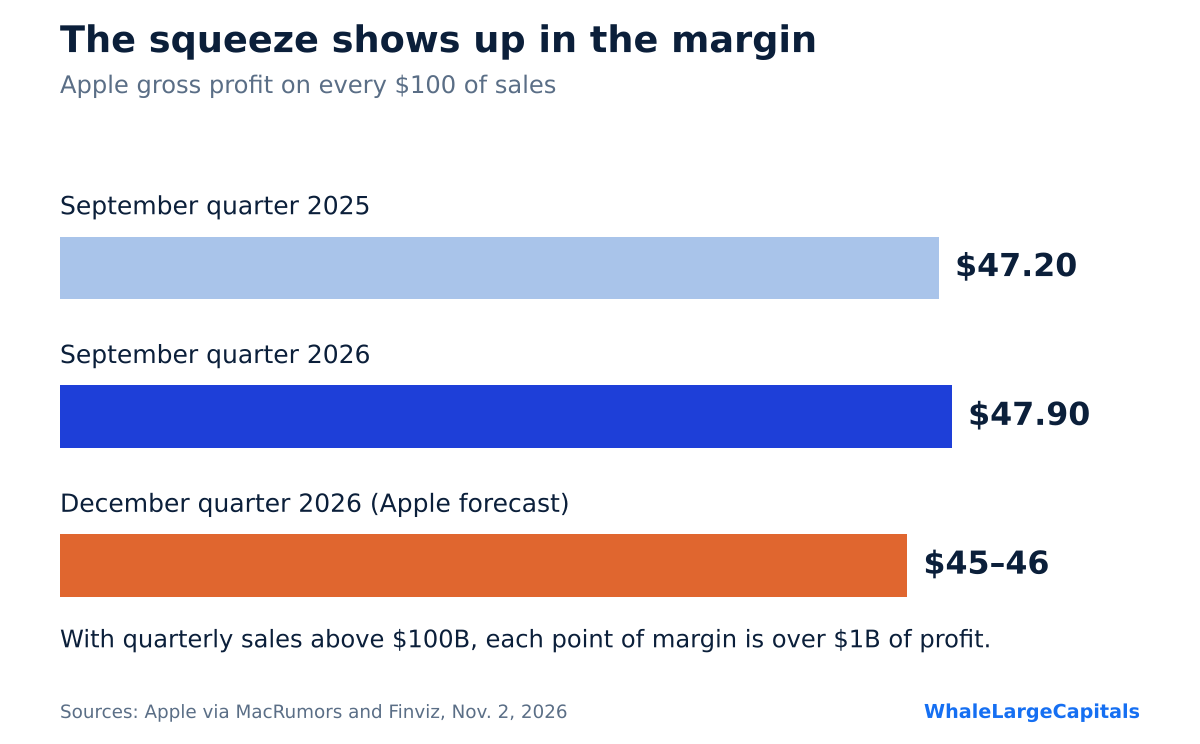
Good morning. Apple reported after the bell yesterday, and on the surface it was a great quarter: record September sales, iPhone up 17%, earnings ahead of forecasts. The stock fell anyway. The reason is a part most people never think about: the memory chips inside every phone and laptop. AI data centers are buying up so much of it that prices keep climbing, and Apple says that will cut into its profits this holiday season. This morning I'll explain why, and what it means for the gadgets you buy and the index fund you own. | ||||||||
| ||||||||
|
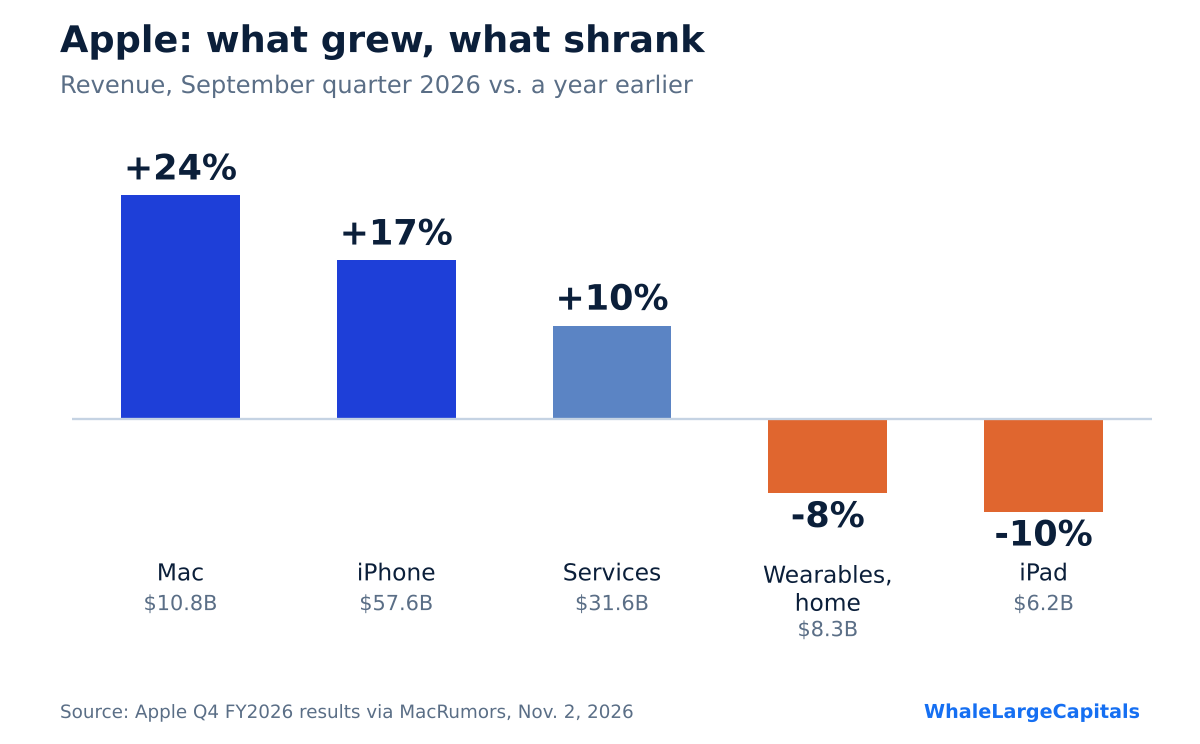
1 of 3 A record quarter, a softer outlookStart with the good news, because there's a lot of it. iPhone sales rose 17% to $57.6 billion, a record for a September quarter. Mac sales jumped 24%. Services, which includes the App Store, iCloud and Apple Music, grew 10% to $31.6 billion. Sales in Greater China rose 21%. The weak spots were smaller products: iPad sales fell 10%, and wearables, home and accessories fell 8%. Apple said it couldn't make enough iPhones, iPads and Macs to meet demand, partly because of tight chip supply. | ||||||||
| ||||||||
|
Apple also expects December-quarter revenue to grow 7% to 10%, which would be its best quarter ever. So demand isn't the problem. The problem is what it costs to build the products. | ||||||||
| ||||||||
|
2 of 3 The memory squeezeEvery phone, laptop and AI server needs memory chips. The difference is that AI servers need enormous amounts of it, and the companies building data centers are paying whatever it takes. That leaves less for everyone else, at higher prices. On the call, Ternus called the memory situation “unprecedented.” He said Apple saw higher memory costs than in the June quarter, and that price increases “provided some offset.” Apple expects memory costs to keep rising into next year. | ||||||||
| ||||||||
|
Apple is one of the most profitable hardware makers in the world, with plenty of room to absorb costs. Many companies that make cheaper devices have much less. | ||||||||
| ||||||||
|
3 of 3 What it means for youAs a shopper. When memory costs more, device makers have three choices: charge more, put less memory in, or accept lower profits. Apple is mostly doing the third, with some help from price increases. Cheaper brands are more likely to do the first two. That means a laptop at last year's price may come with less storage. As an investor. If you own an S&P 500 or total market index fund, Apple is one of your largest holdings, whether you picked it or not. A two-point drop in its margin matters to your 401(k) more than most single-company news does. As a reader of earnings. This is a pattern to expect this season. AI spending is great news for the companies selling to data centers. For companies that buy the same parts, like phone, PC and car makers, it's a rising cost. | ||||||||
Test yourself: who moved up the line?When one part gets scarce, the sellers win and the buyers pay.
| ||||||||
The Protocol
Four moves to make this week
| ||||||||
| ||||||||
The Boardroom
A question I get a lot: Apple beat the estimates. Why did the stock fall?Because the beat was already expected, and the stock price is about the future. By the time a company reports, investors have mostly priced in a good quarter. What they don't know yet is the outlook, and that's where the surprises are. Yesterday, two things disappointed: a lower margin forecast and slower services growth than analysts wanted. Services is Apple's most profitable business, so even a small slowdown there matters. None of this makes Apple a bad company. It means the price had more good news built into it than the forecast delivered. | ||||||||
|
That's it for this morning. Today is Election Day, and markets may be jumpy tonight and tomorrow. Whatever happens, the plan stays the same: know what you own, and why. Paul Haull |