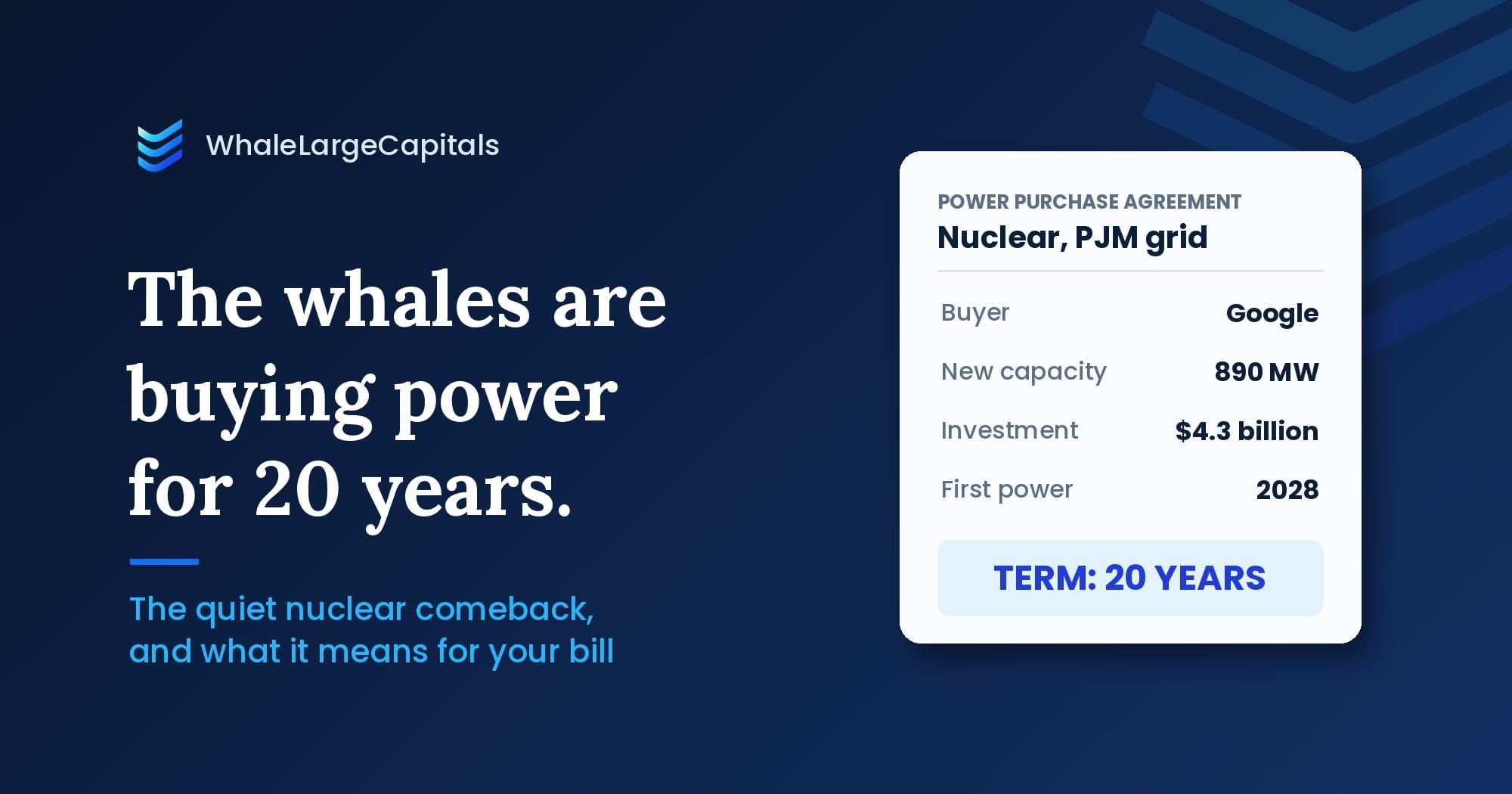
Google just bought power for the next 20 years.
| ||||||||
| ||||||||
Morning briefing
The whales are buying power for 20 years. Here's what they know.By Paul Haull. 6-minute read. | ||||||||
|
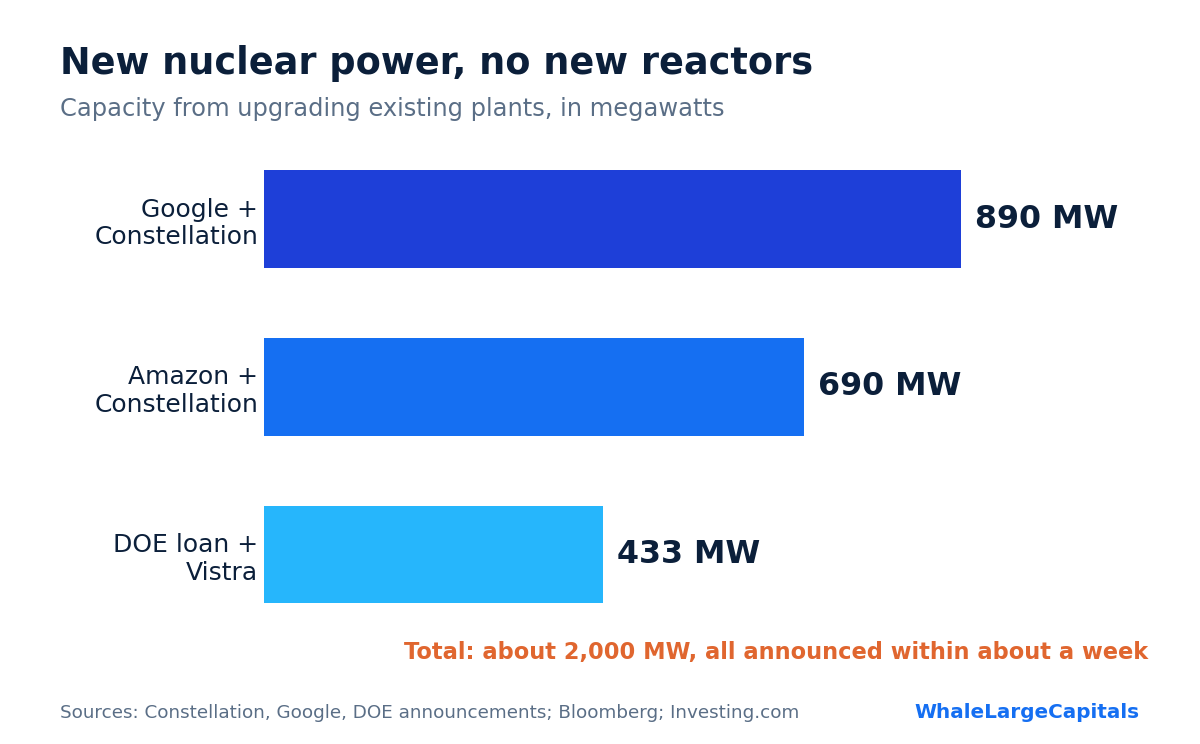
Good morning. After a week of oil shocks and diesel headaches, here's some genuinely good news. In about a week, three deals added roughly 2,000 megawatts of new nuclear power to America's largest grid, without building a single new reactor. And the buyers behind them are telling you something worth hearing: the biggest companies on earth are locking in electricity for decades. | ||||||||
| ||||||||
|
1 of 3 New power from old plantsThe industry word is "uprate." Instead of building a new reactor, which can take a decade or more to permit and construct, a company replaces turbines, pumps and controls in a plant that already exists, and squeezes more electricity out of the same site. It's the cheapest, fastest kind of new nuclear power there is. Here's what this week added. | ||||||||
| ||||||||
|
All three deals feed the PJM grid, which runs power for 13 states and Washington, D.C., and is straining under demand from new data centers. More supply from existing sites is exactly what that grid needs, and as the Energy Department notes, upgrades like these don't require new transmission corridors. | ||||||||
| ||||||||
|
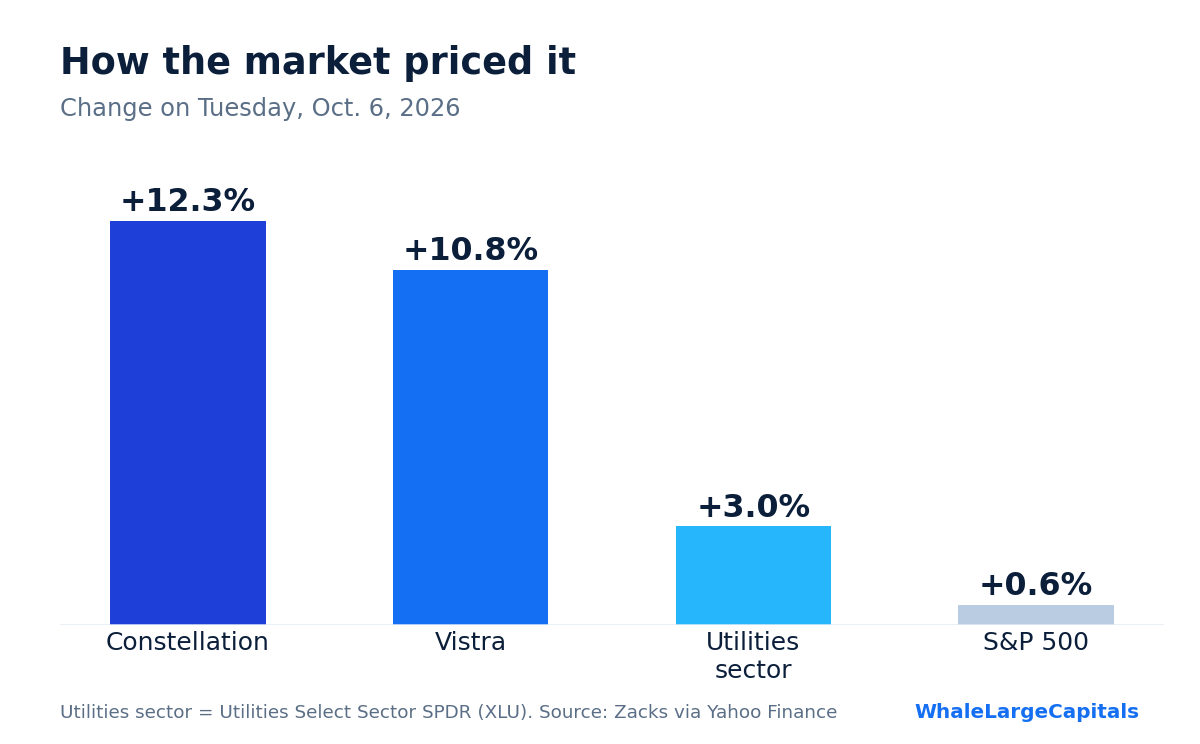
2 of 3 Why a 20-year contract is worth so muchA power purchase agreement is simple. The buyer promises to take a set amount of electricity for a set number of years. Both sides trade away some upside for something more valuable: certainty. Google gets power it can count on for two decades, whatever happens to energy prices. Constellation gets something just as precious: steady, contract-like revenue from one of the most creditworthy customers on earth. That's what lets a company commit $4.3 billion to plant upgrades with confidence. Investors understood immediately. | ||||||||
| ||||||||
|
One of these deals, though, isn't quite what the headline says. Read the government's own words. | ||||||||
| ||||||||
|
3 of 3 What it means for your electric billThis is the part the press releases don't dwell on. When data centers sign up for huge amounts of power, the question is who pays for the extra supply and the grid upgrades. Households worry, with reason, that it ends up on their bills. Constellation says the Google deal is built to fit a PJM proposal called "Bring Your Own Power," meant to let large users add their own supply without passing the cost to residential customers. That's the right idea. But it's a proposal, and the company's description, not a guarantee written into your rate. Timing matters too. The first Google-backed upgrade isn't due until 2028. So the good news is real, but it's long-term good news. For the next couple of years, demand is likely to keep running ahead of new supply. | ||||||||
Test yourself: who moved up the line?Long contracts sort winners from everyone else.
| ||||||||
The Protocol
Four moves to make this week
| ||||||||
| ||||||||
The Boardroom
A question I get a lot: will data centers raise my electric bill?They can, and on some grids that pressure is already real. When demand grows faster than supply, prices for everyone tend to rise, and new lines and substations have to be paid for by someone. Here's your leverage. Electricity rates are set in public. Your state utility commission holds rate cases with open comment periods, and many let residents submit comments online. Look up your utility's next case. Utilities send lawyers to those hearings. Most households never send a word. | ||||||||
|
That's it for this morning. When the biggest buyers in the world lock in a price for 20 years, pay attention. They aren't predicting the future. They're making sure they don't have to. Paul Haull |