|
| The Morning Letter |
Thursday, October 1, 2026 |
|
Morning briefing
Medicare premiums are falling 16%. Read the rest of the bill.
By Paul Haull. 6-minute read.
|
|
Good morning.
Washington had good news for retirees this week: Medicare Advantage premiums are going down next year. I've read enough contracts to know that when the number on the front page falls, you turn to page two. Insurers don't price a plan by its premium. They price it by the whole contract.
|
|
What happened
Medicare Advantage: the average monthly premium is projected to fall from $14.37 this year to $12 in 2027, a drop of about 16.5%, according to the Centers for Medicare & Medicaid Services.
Stand-alone drug plans: the average Part D premium edges up from $35.09 to about $36 a month, even as a temporary federal subsidy for those plans ends.
The fine print moves the other way: the standard Part D deductible rises to $700 and the yearly cap on drug costs to $2,400.
Your deadline: open enrollment runs from October 15 to December 7. CMS says about 8 in 10 current Advantage members can keep their plan at the same or a lower premium.
Read the CMS announcement
|
|
|
1 of 3
The premium is the smallest number on the bill
A $12 premium works out to $144 a year. That's the number in the headlines. Now line it up against the other numbers that decide what you actually pay.
|
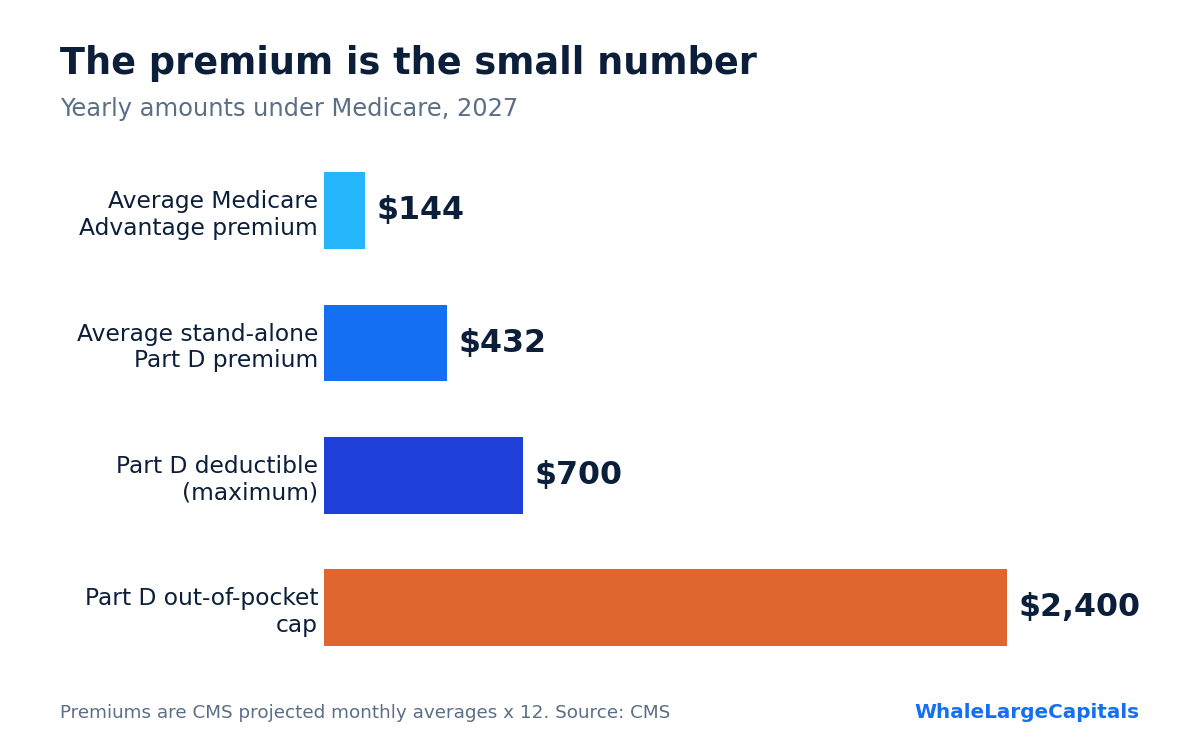
How to read this: the top bar is what gets announced. The bottom bar is what a single expensive prescription can cost you in a year. Premiums are averages; the deductible and cap are the legal maximums for 2027.
|
|
|
For a healthy person who rarely sees a doctor, the premium may be most of the cost. For anyone on a brand-name drug or facing a procedure next year, it's a rounding error. The money is in the deductible, the copays, the drug list and the network.
|
|
Paul's rule
Never price a contract by its cheapest line.
|
|
|
2 of 3
The limits quietly moved up
While premiums made the news, the two numbers that cap your drug spending went up. Both are set each year under federal rules, and both apply to every Part D plan, whether stand-alone or inside an Advantage plan.
|
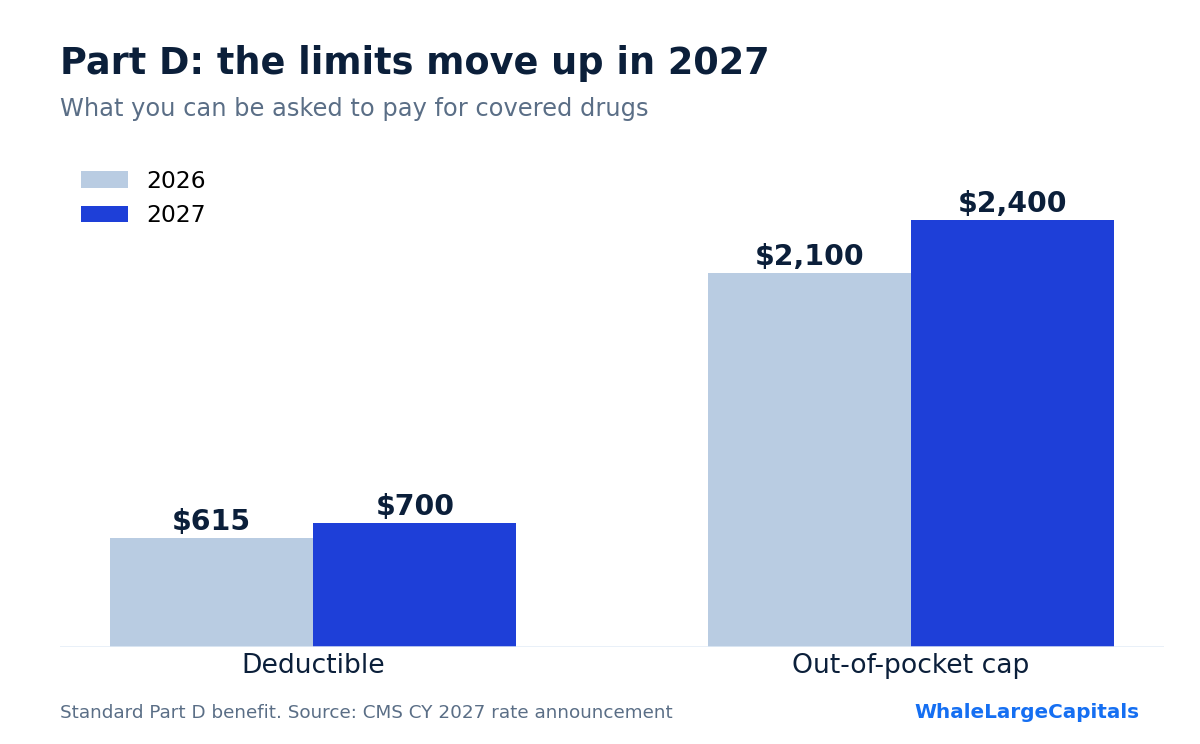
How to read this: the pale bars are this year, the dark bars are next year. Once your covered drug spending hits the cap, you pay nothing more for covered drugs until January.
|
|
|
The cap is real protection; it didn't exist a few years ago. But if you take an expensive medicine, plan on reaching $2,400 next year instead of $2,100. That's $300 more, before a single premium payment. The document that tells you how your plan handles all this is already in your mailbox.
|
|
The Fine Print
If you're in a Medicare Advantage or Part D plan, your insurer must send you an Annual Notice of Change before October 1. It's the most important document most retirees never open.
It lists, line by line, what changes on January 1: premium, deductibles, copays, which drugs are covered and at what tier, and which doctors and hospitals stay in network. If a plan cut something, this is where it's written down.
If you haven't received yours, call the number on your member card and ask for it today.
Compare 2027 plans on Medicare.gov
|
|
|
3 of 3
How a plan can cost less and still cost you more
An Advantage plan is paid by Medicare every month for each member. The insurer then decides how to shape the benefit: how much to charge up front, how much at the counter, which doctors to include and which treatments need permission first.
That last part matters more than most people realize. Medicare Advantage insurers made nearly 53 million prior authorization decisions in 2024, according to a KFF analysis. Each one is a point where a treatment can be delayed or denied.
None of this makes Advantage plans bad. CMS says plan choice and pricing are stable, and many members will pay less. It means the cheapest premium and the cheapest year are not always the same plan. You find out which by running your own numbers, not the insurer's ad.
|
Test yourself: who moved up the line?
The same 2027 rules land very differently depending on how you use your coverage.
|
Front of the line
Healthy members who rarely use care and pick up the lower premium
People whose drugs and doctors stay covered in 2027
Anyone who compares plans before December 7
|
|
Back of the line
People on expensive brand-name drugs, who face the higher deductible and cap
Members whose doctor or hospital leaves the network
Anyone who lets the plan renew without reading the notice
|
|
The Protocol
Four moves to make before October 15
| 1 | Open your Annual Notice of Change. Mark every line that got worse: deductible, copays, drug tiers, network. If it never arrived, call your plan. |
| 2 | Write down every drug and every doctor you rely on. Then check each one against the 2027 plans in the Medicare.gov Plan Finder. It takes about 30 minutes and shows estimated yearly costs, not just premiums. |
| 3 | Compare total cost, not premium. Premium times 12, plus expected drug costs, plus the copays you're likely to use. The lowest total wins, whatever the ads say. |
| 4 | Get a free second opinion. Every state runs a State Health Insurance Assistance Program (SHIP) with counselors who don't sell plans. Book early; October fills up. |
|
|
Liquidation Value: switching plans
Changing coverage has exit costs too. Know them before you move.
Leaving Advantage. If you go back to Original Medicare, in most states a Medigap insurer can price or deny a supplement based on your health. Check your state's rules first.
Networks. A new plan may not include your doctors. Confirm by calling the doctor's office, not just the plan directory.
Drugs. A drug on one plan's list can sit on a higher tier, or need prior approval, on another.
Timing. Changes made by December 7 take effect January 1. Miss the window and you're mostly locked in for the year.
I'm wrong if you're healthy, your doctors are in network and your drugs are covered. Then a low-premium plan may simply be the best deal on the table.
|
|
The Boardroom
A question I get a lot: is a $0-premium plan a trap?
Not by itself. Medicare pays the insurer a monthly amount for every member, so a plan can charge you nothing up front and still make money. You also keep paying your Part B premium either way.
What a $0 premium tells you is where the plan doesn't collect. Your job is to find where it does: copays, deductibles, the network, or permission rules. If those fit how you use care, $0 can be a good deal. If they don't, it's the most expensive free thing you'll buy all year.
|
|
That's it for this morning. When an insurer cuts the price on the front page, read page two before you sign up for another year.
Paul Haull
|