Meta spent more than it made, and your new shares won’t vote.
| ||||||||
| ||||||||
Morning briefing
Meta wants more of your money. It doesn't want your vote.By Paul Haull. 6-minute read. | ||||||||
|
Good morning. Two of the biggest names in your index fund reported last night. Meta beat revenue forecasts, Tesla beat on earnings per share, and most headlines stopped there. The more important numbers were further down. Both companies are pouring money into artificial intelligence faster than their businesses generate it, and Meta announced a new kind of stock that lets it raise money from shareholders without giving them any say. This morning I'll show you what that means for everyone who owns these companies, which is most people with a 401(k). | ||||||||
| ||||||||
|
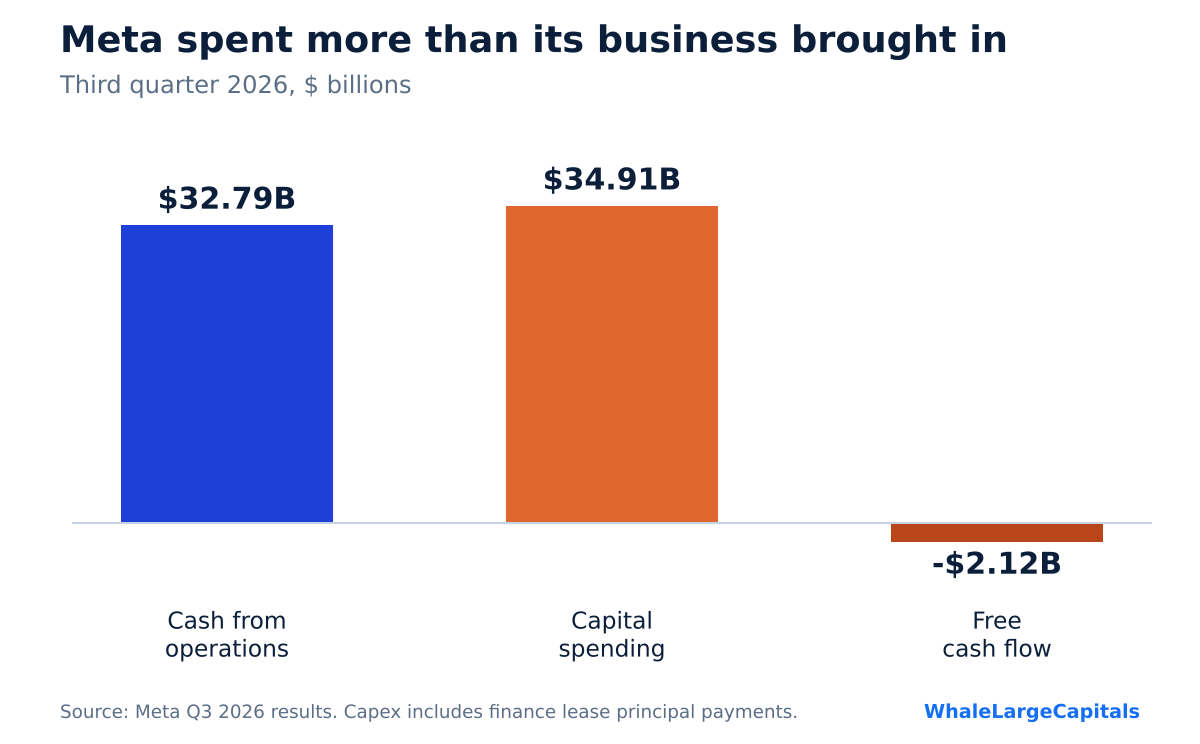
1 of 3 Spending more than the business brings inEarnings per share is the number on every headline. Free cash flow is the number that tells you whether a company can pay for its plans. It's simple: the cash the business generates, minus what it spends on buildings, servers and equipment. For years, Meta produced so much free cash flow that it could fund its ambitions and still buy back tens of billions of dollars of its own stock. Last quarter, the spending outran the cash. | ||||||||
| ||||||||
|
Meta isn't in trouble. It has $82 billion in cash and securities, and its ad business is growing fast. But when a company spends more than it makes, the money has to come from somewhere: savings, borrowing, or new shares. Meta has also built up $81 billion of long-term debt. On Wednesday, it showed us the third option. | ||||||||
| ||||||||
|
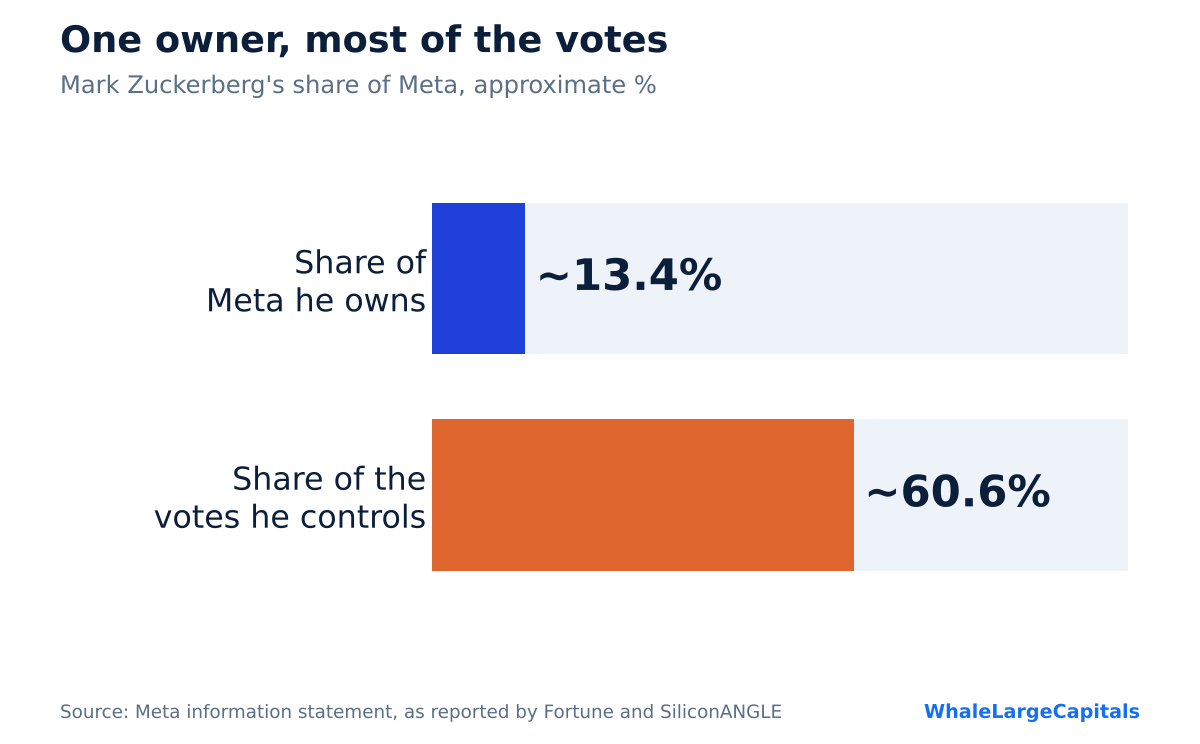
2 of 3 A share with no sayMeta already has two classes of stock. The public owns Class A, with one vote per share. Class B shares carry ten votes each, and they're the source of Mark Zuckerberg's control. That's how he runs the company while owning a small slice of it. The new Class C shares carry no vote at all. Every shareholder gets one for each share they already own, which Meta says will work like a two-for-one stock split. Nobody loses a vote on the day it happens. The difference comes later: when Meta sells new Class C shares to raise money or pays employees with them, outside owners' slice of the profits shrinks, while control stays exactly where it is. | ||||||||
| ||||||||
|
This isn't new. Alphabet did something similar in 2014. But it tells you how Meta plans to pay for what comes next, and who will absorb the cost if it does. | ||||||||
| ||||||||
|
3 of 3 Tesla is on the same roadTesla's story is smaller but rhymes. Sales were flat and deliveries fell 2%. Spending on factories, chips and its self-driving push jumped 110%, and free cash flow dropped by almost two-thirds. Operating income fell 56%. The bull case is real: paid subscriptions to its driver-assistance software rose 67% to 1.74 million, and its robotaxi fleet is logging more miles without a safety driver. But for now, shareholders are funding a bet whose payoff is years away. That's the pattern across Big Tech this year. The companies that carry the most weight in your index fund are turning from cash machines into heavy spenders. That isn't automatically bad. It does change what you own. | ||||||||
Test yourself: who moved up the line?When a company spends heavily and changes its share structure, not everyone wins equally.
| ||||||||
The Protocol
Four moves to make this week
| ||||||||
| ||||||||
The Boardroom
A question I get a lot: I own 50 shares. Does my vote even matter?On its own, no. Your 50 votes won't swing a Meta shareholder meeting, and Zuckerberg's majority means even large institutions can't outvote him. But votes are only half of what a share gives you. The other half is your claim on the profits, and that's the part non-voting stock can quietly shrink over time. So the useful question isn't "do I get a vote?" It's "who decides how my money gets spent, and what happens to my slice when they need more?" For Meta, the answer is now in writing. Price that into how much of it you're willing to own. | ||||||||
|
That's it for this morning. Next time a company you own reports, skip the earnings headline and look for free cash flow. It's usually in the first table, and it tells you who's really paying for the plan. Paul Haull |