Meta stopped buying its stock, and now it’s selling $97.5 billion.
| ||||||||
| ||||||||
Morning briefing
Meta stopped buying its stock. Now it's selling $97.5 billion of it.By Paul Haull. 6-minute read. | ||||||||
|
Good morning. Last Thursday I wrote that Meta's new non-voting shares told you how it planned to pay for its AI build-out. It took five days for the plan to arrive. On Monday, Meta announced it would sell up to $97.5 billion of new stock. If you own an S&P 500 or Nasdaq-100 fund, you own Meta, so this is your money too. This morning I'll walk through what Meta is selling, who's buying, and what it does to your slice. | ||||||||
| ||||||||
|
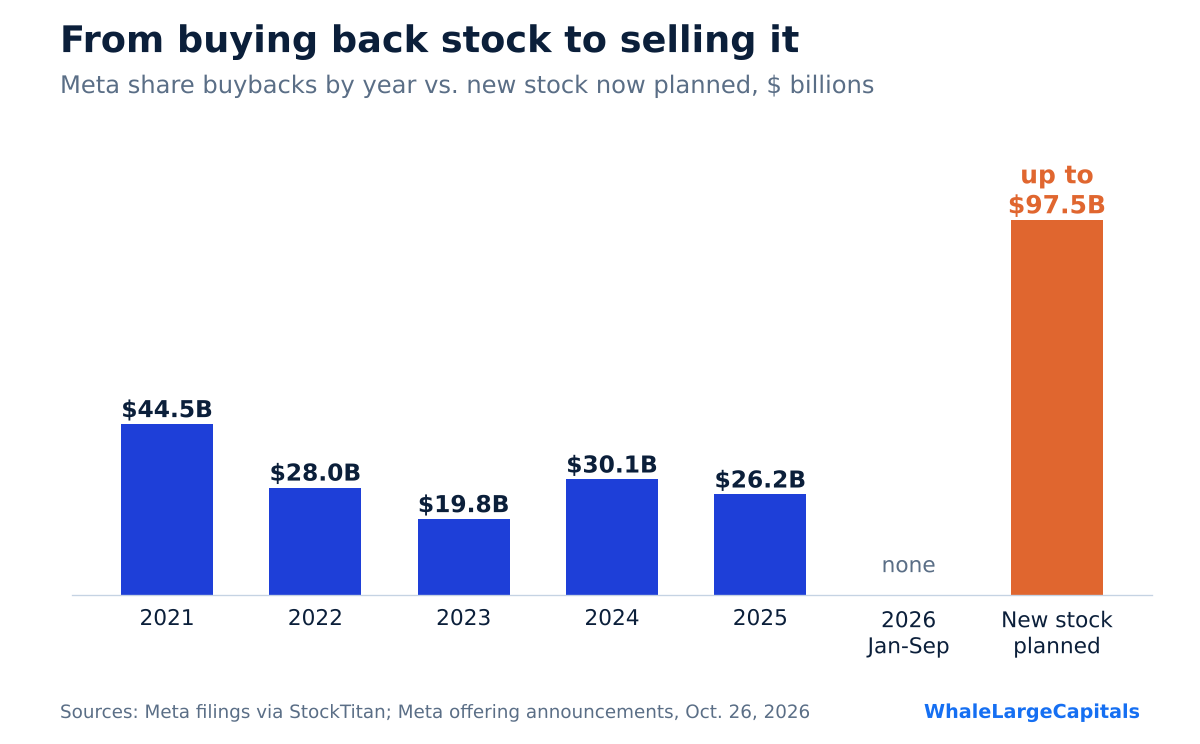
1 of 3 From buying back to sellingFor years, Meta used its spare cash to buy back its own shares. Buybacks shrink the number of shares outstanding, so each remaining share owns a bigger piece of the profits. From 2021 through 2025, Meta spent about $149 billion doing it. In the first nine months of this year, it bought back nothing. Now it's doing the opposite: creating new shares, which spreads the same profits across more owners. | ||||||||
| ||||||||
|
Why the switch? Meta expects to spend $135 billion to $145 billion this year on data centers and chips. Last quarter that spending topped the cash its business produced. Meta has also warned investors it will need to raise "hundreds of billions of dollars" over several years, according to The Irish Times. Cash on hand and borrowing can't cover all of it. | ||||||||
| ||||||||
|
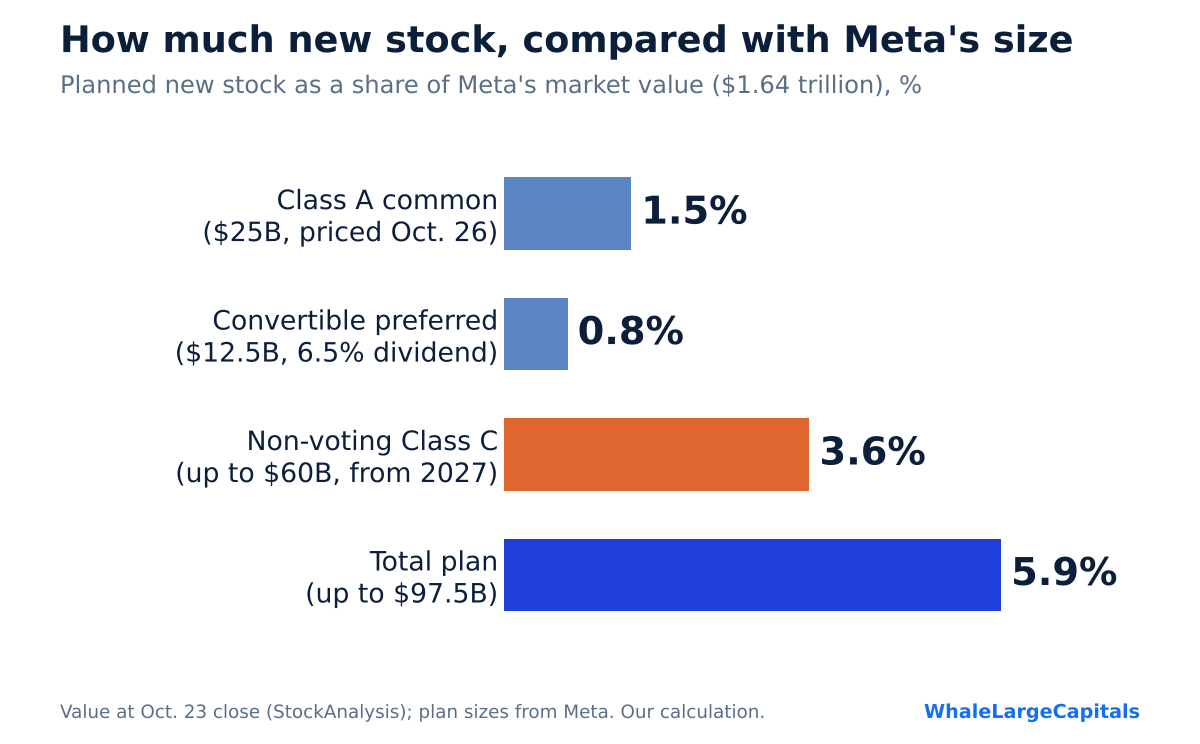
2 of 3 What it does to your sliceMeta was worth about $1.64 trillion at Friday's close. The full plan adds new stock equal to roughly 6% of that. If every piece is sold and you buy nothing, your share of Meta's future profits shrinks by about the same amount. That isn't automatically bad. If Meta earns more on the new money than it costs, every shareholder comes out ahead. But you're now relying on the AI build-out to pay off, rather than on buybacks to lift your stake. | ||||||||
| ||||||||
|
Notice who comes first. The preferred stock pays a fixed 6.5% a year, about $812 million annually on $12.5 billion, before converting into common shares around August 2029. Common shareholders get whatever growth is left. | ||||||||
| ||||||||
|
3 of 3 The money goes in a circleThe most telling detail is the buyer list. Nvidia, AMD and Broadcom make the chips that fill AI data centers like Meta's. Now they may buy up to $5 billion of Meta's stock, giving Meta cash that can flow back to them as chip orders. That's not illegal or hidden, and $5 billion is a small part of the total. But it's worth noticing. When suppliers start funding their customers, part of the demand you see in their sales is demand they paid for. If you own a chip fund and a Meta-heavy index fund, you're on both sides of that circle. And Meta isn't alone. The AI build-out is turning the biggest companies in your index fund from cash machines into capital raisers, through debt, private deals and now stock. This week Microsoft, Alphabet and Amazon report. Listen for one question: how will they pay for it? | ||||||||
Test yourself: who moved up the line?A stock sale this size rearranges who gets paid first.
| ||||||||
The Protocol
Four moves to make this week
| ||||||||
| ||||||||
The Boardroom
A question I get a lot: is a company selling stock always bad news?No. Young companies sell stock all the time to fund growth, and it's often the right call. What matters is the price and the purpose. Selling shares when they're expensive to fund projects that earn a high return can make every owner richer. What's unusual here is the shift. Meta spent five years telling you, with $149 billion of buybacks, that its stock was the best use of its cash. Now it's telling you, with up to $97.5 billion of new shares, that data centers are. Both can't be the best deal at the same price. Your job is to decide which message you believe, and size your position to match. | ||||||||
|
That's it for this morning. When the other tech giants report this week, skip past the headline profit and look for one line: how they plan to pay for what they're building. That's where your slice gets decided. Paul Haull |