Microsoft rose, Alphabet fell 10%, and cash made the difference.

| ||||||||
| ||||||||
Morning briefing
Microsoft rose. Alphabet fell 10%. Same bet, different cash.By Paul Haull. 6-minute read. | ||||||||
|
Good morning. Last night two of the biggest companies in your index fund reported on the same evening. Both are spending enormous sums on artificial intelligence. Both grew their cloud businesses at a remarkable pace. One stock jumped, the other fell about 10%. This morning I'll show you the two numbers that explain the difference, and why one of them should worry anyone who owns Google for its search business. | ||||||||
| ||||||||
|
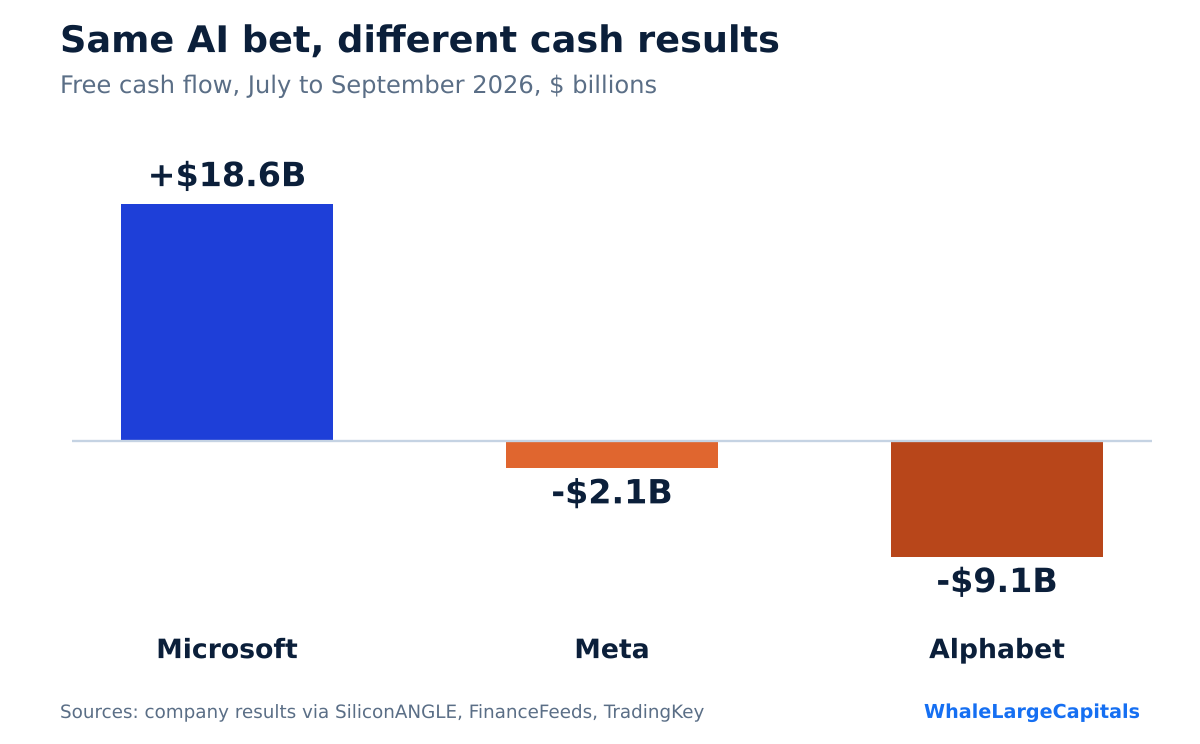
1 of 3 The first number: who still makes more than they spendEvery big tech company is building AI data centers. The question investors now ask isn't "are you spending?" It's "can your business pay for it?" The answer is free cash flow: the cash a company generates minus what it spends on buildings and equipment. Microsoft spent $45.2 billion on capital projects last quarter, a lot, but less than Wall Street expected, and its business still threw off more than enough cash to cover it. Alphabet spent $51.4 billion and came up $9.1 billion short. It was the second straight quarter in the red. | ||||||||
| ||||||||
|
Last week, Meta's negative cash flow came with a plan to sell up to $97.5 billion of new stock. Alphabet hasn't announced anything like that. But it guided to $195 billion to $205 billion of capital spending this year and said 2027 will "increase significantly." Investors are now asking how it will pay. | ||||||||
| ||||||||
|
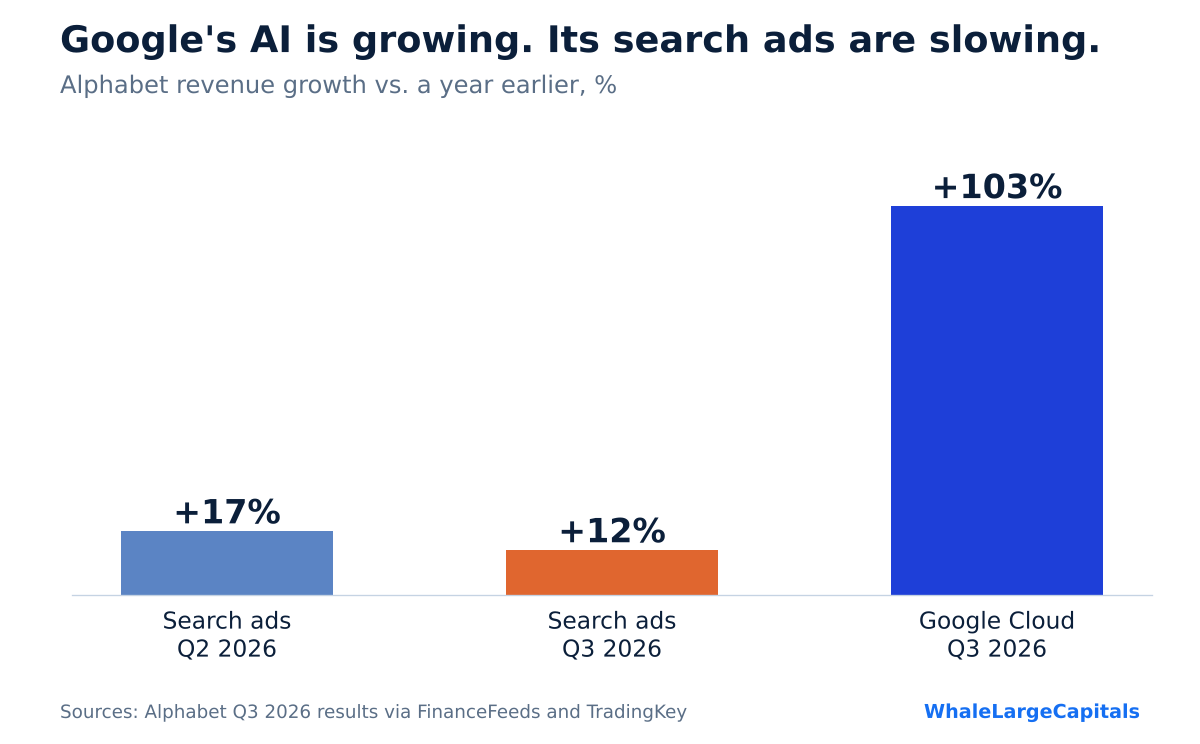
2 of 3 The second number: Google's AI is eating its own adsHere's what makes Alphabet's quarter different from a simple spending story. Search advertising is the engine that pays for everything at Google. Last quarter it grew 12%, down from 17% the quarter before, and came in about $1.6 billion below expectations. Alphabet's explanation: its AI Mode answers more questions directly, which raises how much people search but shows them fewer pages with ads. Management calls that trade-off temporary. In plain terms, Google's new product is competing with its old one. | ||||||||
| ||||||||
|
Business schools have a name for this: a company disrupting itself before a rival does it first. It can be the smart move. But while it happens, the old profit engine slows down at the exact moment the company is spending the most. That combination is what investors sold last night. | ||||||||
| ||||||||
|
3 of 3 What it means if you own an index fundIf you own an S&P 500 fund, you own both companies, and both of last night's reactions land in your account. That's the point of an index fund: you don't have to pick the winner. But it's worth noticing what the market is now grading. Investors are separating companies whose existing business pays for the build-out from companies that need outside money or are watching their core business slow. That shift can move big stocks a long way, as Alphabet showed. If you own individual tech stocks, or funds packed with them, add one line to what you check each quarter: free cash flow, next to revenue growth. Amazon reports tonight. Check both. | ||||||||
Test yourself: who moved up the line?When the market starts grading cash, the order changes.
| ||||||||
The Protocol
Four moves to make this week
| ||||||||
| ||||||||
The Boardroom
A question I get a lot: should I buy a stock after a big earnings drop?Only if you'd have wanted to own it before the drop, at a price you now find attractive. A 10% decline makes a stock cheaper. It doesn't make it a bargain on its own. Ask what changed. If the drop came from a one-time accounting loss, the business may be fine. If it came from the core product slowing while spending rises, as with Alphabet's search, you're buying into a question that won't be answered for several quarters. Size your position for that kind of wait. | ||||||||
|
That's it for this morning. Amazon reports tonight. When you see the headline, scroll past revenue and look for free cash flow. It'll tell you which side of last night's line Amazon is on. Paul Haull |