September added just 29,000 jobs, and July was a loss.

| ||||||||
| ||||||||
Morning briefing
The jobs report is a first draft. Read it like one.By Paul Haull. 6-minute read. | ||||||||
|
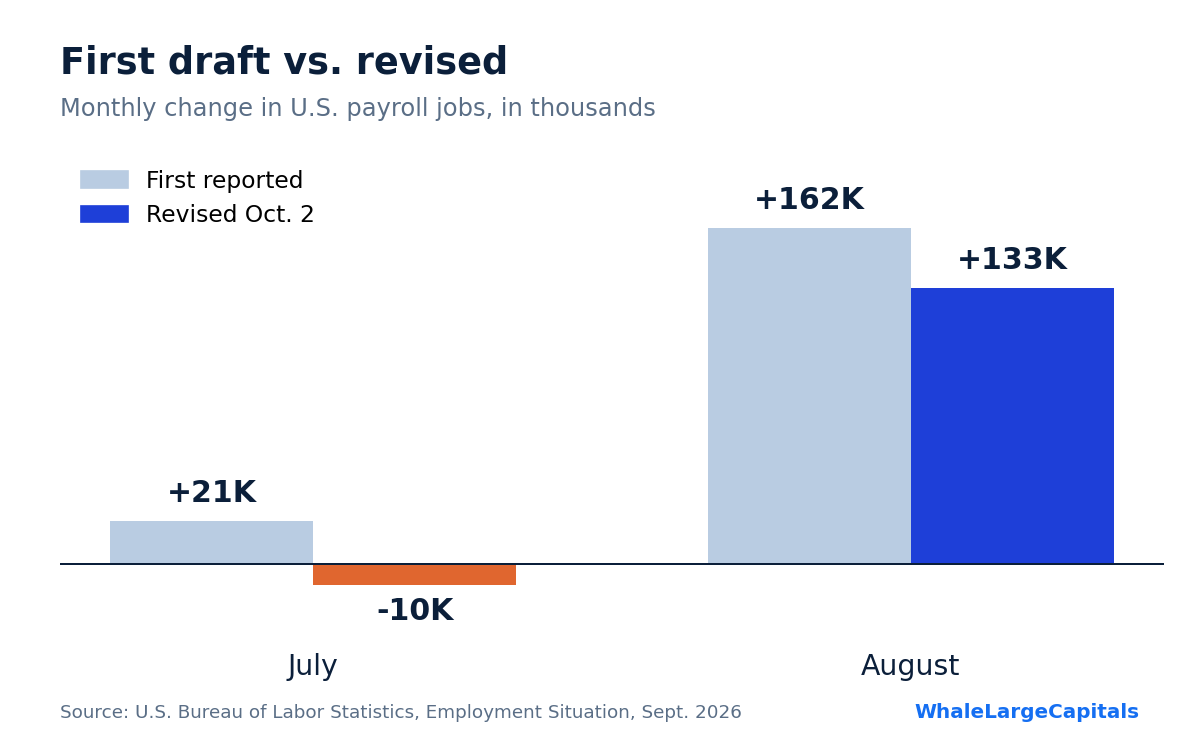
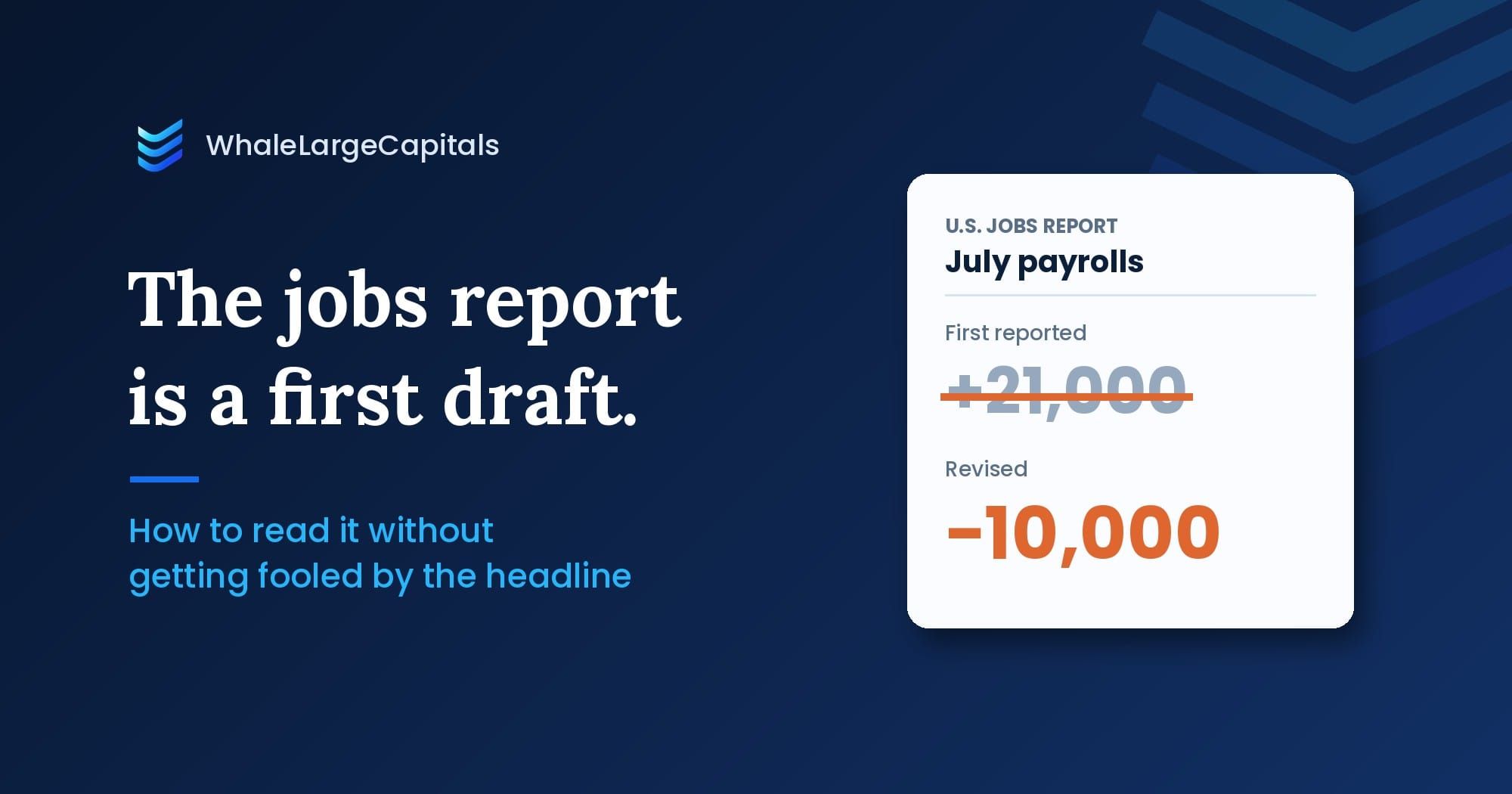
Good morning. On Friday the government said the economy added 29,000 jobs in September. Markets jumped, bond yields dipped, and the headlines wrote themselves. The most useful number in the report wasn't the 29,000, though. It was buried a few paragraphs down, where July quietly went from a gain to a loss. | ||||||||
| ||||||||
|
1 of 3 Every jobs number is a first draftHere's how the report is built. Every month, the government surveys employers about their payrolls. Not every business answers in time. So the first number is an estimate built on partial returns, and it gets updated twice more as late responses come in. Usually the changes are small. This time they flipped a month. | ||||||||
| ||||||||
|
Think about what that means. When August's 162,000 came out a month ago, it moved markets and set the tone for the Fed. That number no longer exists. Anyone who made a decision on it made it on a draft. | ||||||||
| ||||||||
|
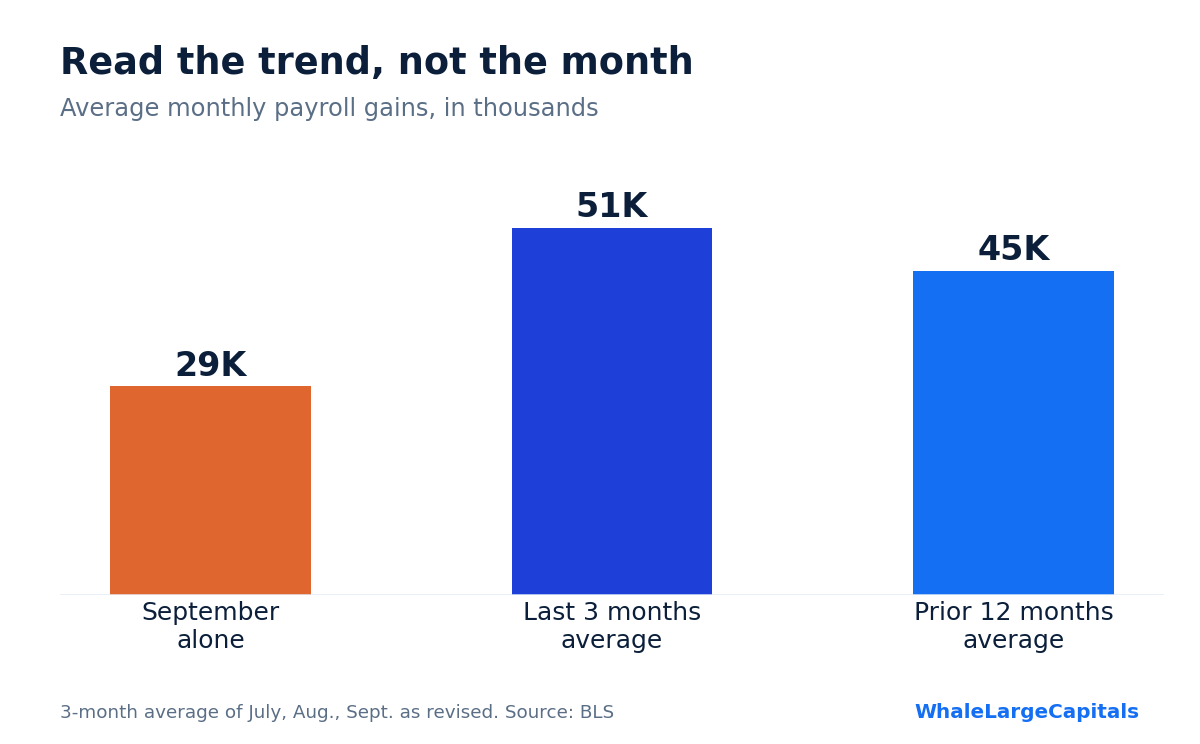
2 of 3 Read the trend, not the monthA single month is noisy. The fix is simple: average the last three, using the revised figures. That smooths out the noise and most of the revision risk. | ||||||||
| ||||||||
|
The unemployment rate tells the same story. It has stayed between 4.1% and 4.3% since March. Economists call this a "low-hire, low-fire" market: people with jobs mostly keep them, but people looking for work wait a long time. In August, the average job seeker had been out of work for more than six months, the longest stretch since early 2022. The government says plainly why its numbers move. It's in the release itself. | ||||||||
| ||||||||
|
3 of 3 Why a retiree should care about a jobs reportYou may not be looking for work. But the jobs report sets the price of money, and that touches your savings directly. A weak report makes another Fed rate hike less likely. That's good news for borrowers and for stocks, which is why the Nasdaq hit a record on Friday. It's less good news for savers counting on short-term rates to keep climbing. If the Fed holds, the yield on cash and short CDs may stop rising. Notice what didn't change, though. Long-term rates barely moved. The 10-year Treasury was back near 5.25% by Monday morning. Lenders still want to be paid well for tying up money for years, weak hiring or not. And with pay rising 3.0% a year while the latest inflation reading was 3.4%, the typical paycheck is losing ground. That's a slow drag on spending, and spending is what keeps companies hiring. | ||||||||
Test yourself: who moved up the line?One soft report, and the line reshuffles.
| ||||||||
The Protocol
Four moves to make this week
| ||||||||
| ||||||||
The Boardroom
A question I get a lot: are the jobs numbers rigged?I understand the suspicion. When a month flips from a gain to a loss, it looks like someone moved the goalposts. But look at how it happened: the government published the correction itself, in the same release, with the old and new figures side by side. That's not how you hide something. The real problem isn't rigging. It's that the first estimate is built on incomplete returns, and markets treat it as gospel anyway. Your edge is simply to be the person who waits for the revised number. | ||||||||
|
That's it for this morning. The next jobs report comes out November 6. When it does, skip the headline and read the revisions first. Paul Haull |