SpaceX insiders can sell on Thursday, so who’s buying?


| ||||||||
| ||||||||
Morning briefing
SpaceX insiders can sell on Thursday. Who's buying?By Paul Haull. 6-minute read. | ||||||||
|
Good morning. SpaceX reported blockbuster results last night, and the stock jumped. The more important date for anyone holding it is tomorrow. That's when up to 1.3 billion shares owned by employees and early investors become free to sell. This morning I'll explain how these "lockups" work, why they're printed in advance for anyone to read, and where you stand in the line when the people who got in first are allowed out. | ||||||||
| ||||||||
|
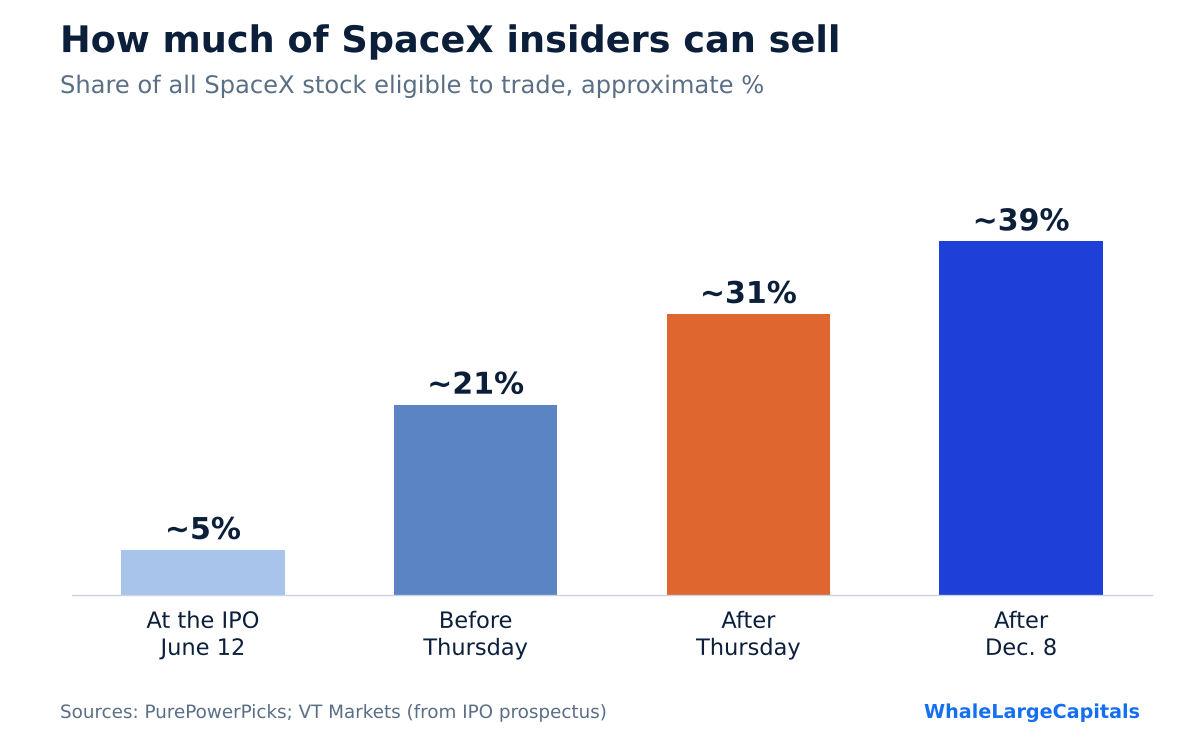
1 of 3 The public bought a sliverHere's what most IPO buyers don't realize. On the first day, the public could buy only about 5% of SpaceX. The rest belonged to Musk, employees and the investors who funded the company privately for years. They agreed not to sell for a set period, so the new stock wouldn't be flooded on day one. That agreement is the lockup. SpaceX's lockup doesn't end all at once. It opens in steps, some tied to dates and some to earnings reports. Each step lets more of the insiders' shares onto the market. | ||||||||
| ||||||||
|
Even after December 8, roughly 60% of the company will still be locked up, most of it Musk's. In other words, the people with the biggest stakes leave last, and they leave in installments. | ||||||||
| ||||||||
|
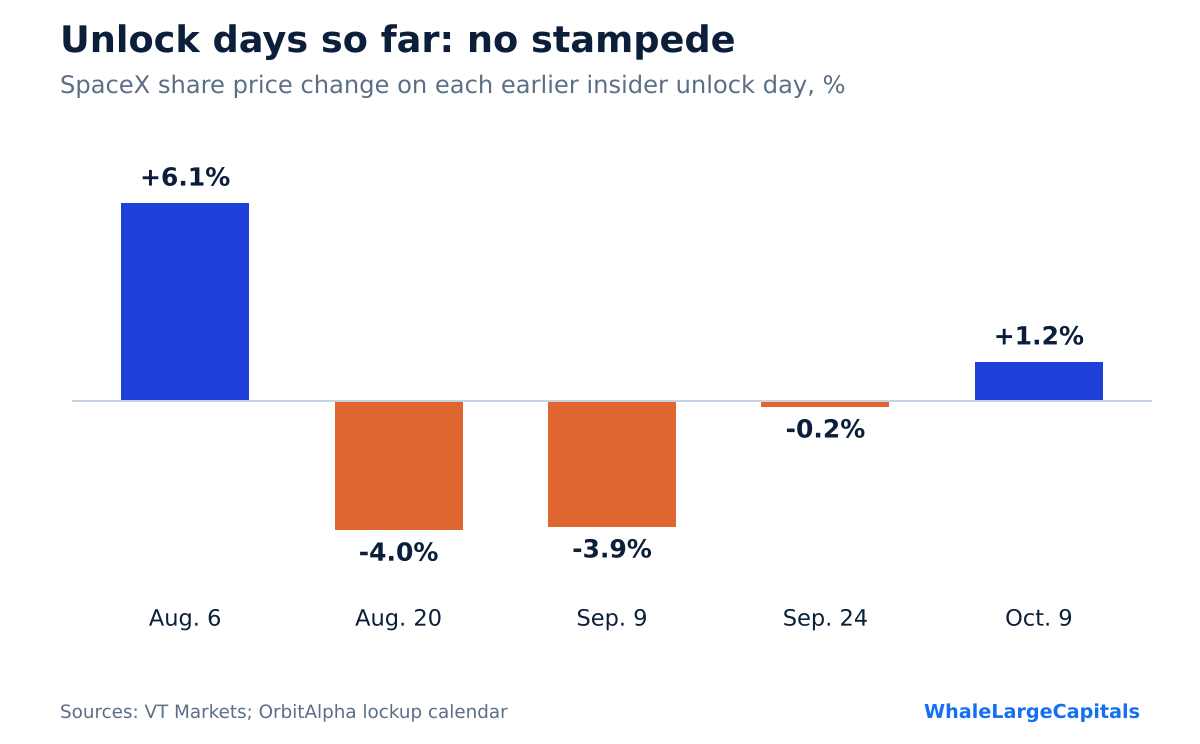
2 of 3 Why unlock days haven't been crashesYou'd expect the stock to drop every time insiders are allowed to sell. So far it hasn't, at least not on the day itself. On the five earlier main unlock days, SpaceX rose twice, fell twice by about 4% and barely moved once. The reason is simple. The schedule is public. Professional traders know the dates months ahead and position for them in advance. By the time the day arrives, much of the selling pressure is often already in the price. | ||||||||
| ||||||||
|
Thursday is different in one way: it's the largest single release so far. Past calm days are a guide, not a promise. And the effect of new supply often shows up over weeks, not hours. | ||||||||
| ||||||||
|
3 of 3 You may already be on the buying sideIf you never bought SpaceX, you might assume none of this concerns you. Check your funds. SpaceX joined the Nasdaq-100 index in July, a few weeks after its debut. Every fund that tracks that index bought it, because the rules required it, not because a manager thought the price was right. That's how index investing works, and for most people it's still the right approach. But it means part of the steady demand that insiders sell into comes from ordinary savers' retirement accounts, buying automatically. The point isn't to dodge SpaceX. It's to know how much of it you hold, through which funds, and to decide whether that amount suits you. | ||||||||
Test yourself: who moved up the line?In an IPO, the line is set by when you got in and when you're allowed out.
| ||||||||
The Protocol
Four moves to make this week
| ||||||||
| ||||||||
The Boardroom
A question I get a lot: should I buy if the stock drops after the unlock?Maybe, but not because of the unlock. A drop on an unlock day tells you about supply: more sellers showed up. It tells you nothing new about the business. The question is the same one you'd ask any day: is this company worth more than its price, and how much of your money should ride on it? If you can answer both questions without mentioning the unlock, you're investing. If your only reason is that it's cheaper than last week, you're betting that the insiders who know the company best are selling at the wrong time. That's a bet worth making rarely, and small. | ||||||||
|
That's it for this morning. Before you buy any new stock, read who's allowed to sell it and when. It's public, it's free, and it tells you where you stand in line. Paul Haull |