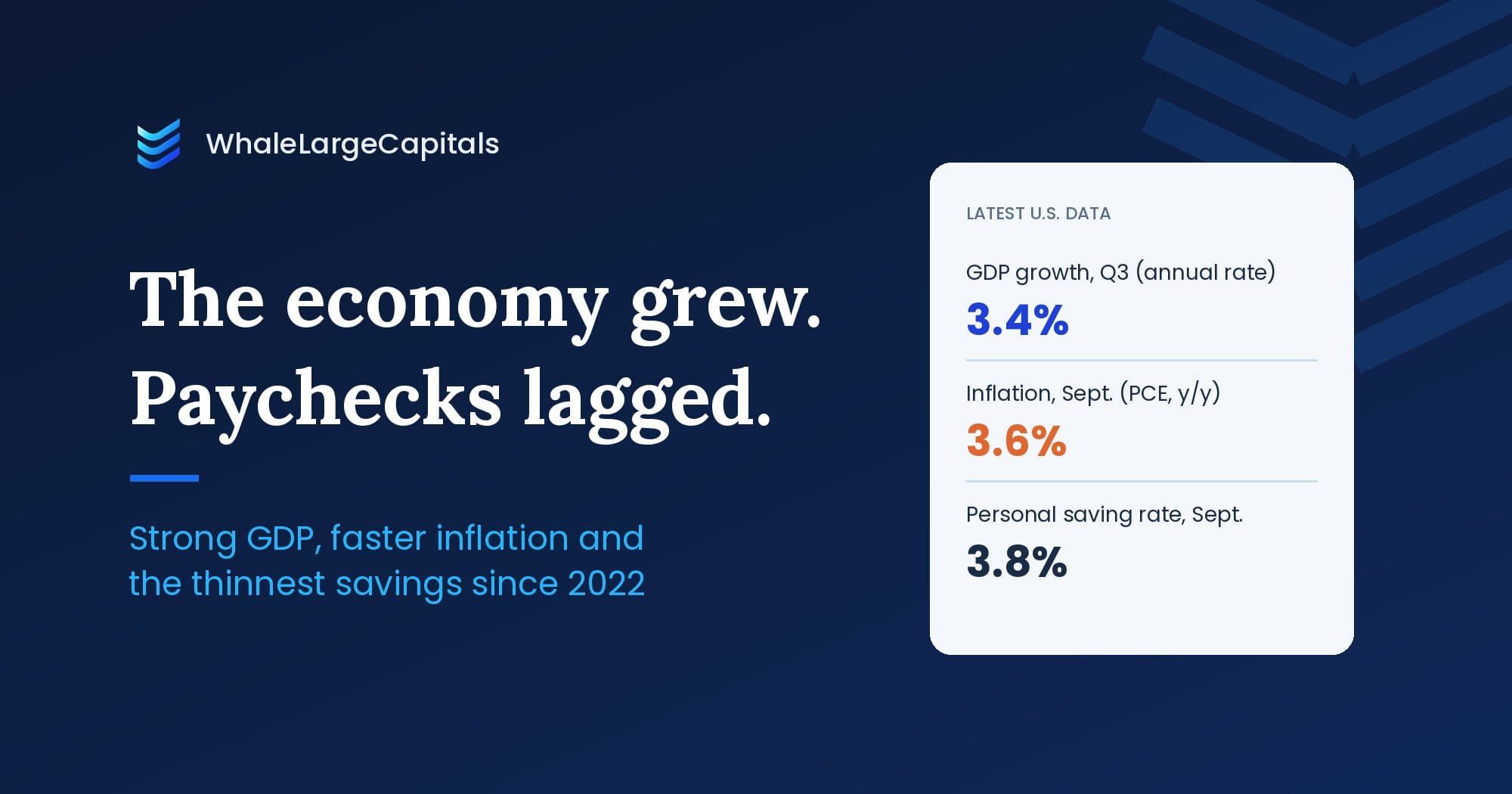
The economy is booming, but your paycheck didn’t get the memo.

| ||||||||
| ||||||||
Morning briefing
The economy is booming. Your paycheck didn't get the memo.By Paul Haull. 6-minute read. | ||||||||
|
Good morning. Yesterday's headlines said the economy grew faster than expected. That's true. But the same government data, released the same morning, told a less cheerful story about households: in September, prices rose faster than paychecks, and Americans saved less of their income than at any point in nearly four years. This morning I'll explain how both can be true at once, and what it means for your own budget. | ||||||||
| ||||||||
|
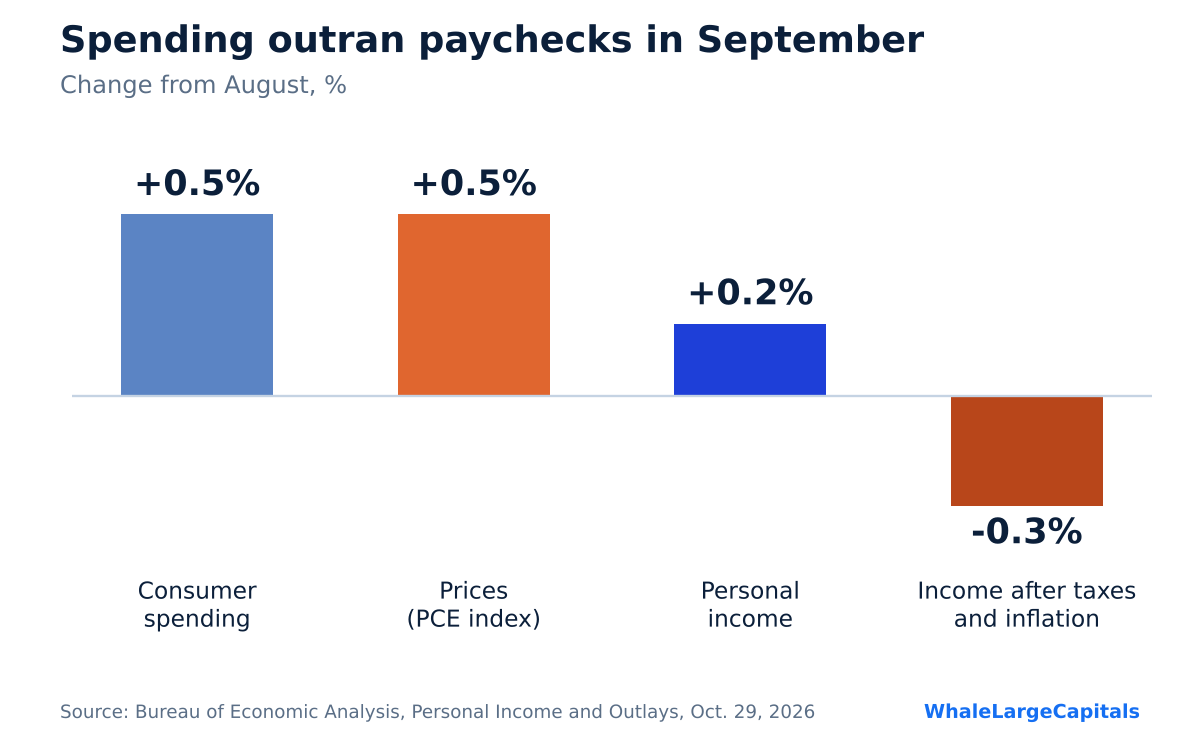
1 of 3 Spending up, real income downIn September, Americans spent 0.5% more than in August. Prices also rose 0.5%. So all that extra spending bought roughly the same amount of stuff. Meanwhile, income rose only 0.2%. Once you subtract taxes and adjust for prices, the money people actually had to live on fell 0.3%. How do households spend more when real income falls? They save less. That's the quiet trade happening underneath a strong headline number. | ||||||||
| ||||||||
|
Energy is a big part of the story. Gasoline and fuel prices have been driving inflation since the conflict with Iran began, and they're not optional purchases for most families. Higher prices at the pump pushed spending up without anyone buying more. | ||||||||
| ||||||||
|
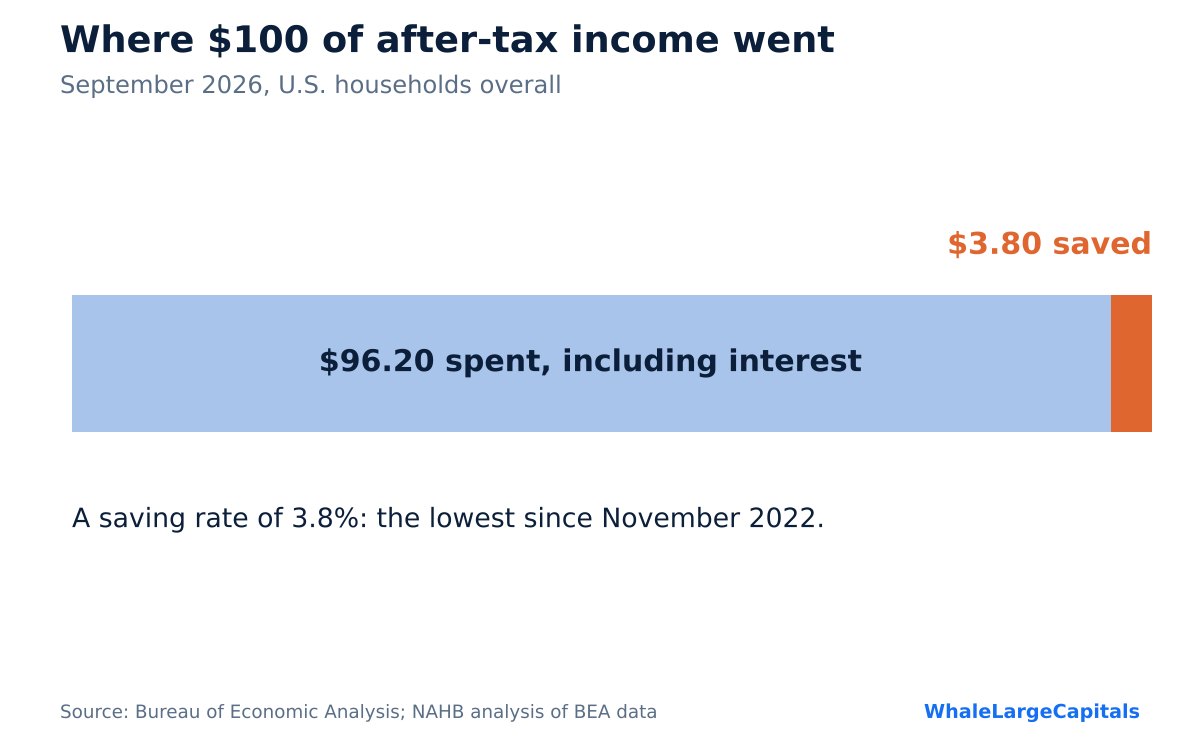
2 of 3 The thinnest cushion in four yearsThe saving rate measures how much of after-tax income households keep rather than spend. At 3.8%, the average household is putting away less than $4 of every $100. That's a national average, so many families save much more and many save nothing at all. A low saving rate doesn't cause a crisis by itself. But it means less cushion if prices keep rising, a job is lost, or the Fed raises rates again in December, which futures markets currently consider likely. | ||||||||
| ||||||||
|
Compare that with a common benchmark for your own planning. Fidelity suggests saving at least 15% of pre-tax income for retirement, counting any employer match. The two numbers aren't measured the same way, but the gap between "under 4%" and "at least 15%" tells you how far the average household is from where most planners would want it. | ||||||||
| ||||||||
|
3 of 3 Why GDP and your wallet disagreeGDP counts everything the economy produces, including business investment and inventories. Last quarter, business investment rose, led by computers and other information-processing equipment, and companies stocked up on inventory. Those added a large share of the growth. None of it raises your take-home pay this month. Consumer spending was still the biggest contributor. But as September shows, part of that spending is just higher prices, paid for out of savings. That's growth households can't keep up forever. For the Fed, a strong economy plus 3.6% inflation points toward another hike. For you, it points toward the same thing it always does in times like this: make your own budget stronger than the national average. | ||||||||
Test yourself: who moved up the line?When prices outrun paychecks, cushions decide who's comfortable.
| ||||||||
The Protocol
Four moves to make this weekend
| ||||||||
| ||||||||
The Boardroom
A question I get a lot: if the economy is strong, why do I feel poorer?Because the economy and your household are measured differently. GDP adds up everything produced, including billions in business investment that never touches your paycheck. Your budget depends on one thing: whether your income grows faster than your costs. In September, for the average household, it didn't. That feeling of falling behind isn't imagined; it shows up in the government's own numbers. The good news is that your budget is the one part of the economy you control. Start with the saving rate. It's the best single measure of whether you're getting ahead. | ||||||||
|
That's it for this morning. Have a good weekend. Take ten minutes to work out your own saving rate. If it's above 3.8%, you're ahead of the country. If it's above 15%, you're ahead of most plans. Paul Haull |