Your 3.6% Social Security raise already trails inflation.

| ||||||||
| ||||||||
Morning briefing
Your raise is 3.6%. Here's how much of it reaches you.By Paul Haull. 6-minute read. | ||||||||
|
Good morning. Two numbers came out this morning. Social Security set next year's raise at 3.6%. The Labor Department said prices rose 3.7% over the past year. One of those numbers is a promise for 2027. The other is a measurement of the past twelve months. Today I'll show you how the raise is calculated, why it trails the prices you're paying now, and who takes a slice of it before it reaches your account. | ||||||||
| ||||||||
|
1 of 3 How the 3.6% is setNobody in Washington votes on your raise. It comes from a formula. Social Security takes a price index called CPI-W, averages it over July, August and September, and compares that with the same three months a year earlier. This year the average came to 328.746, against 317.265 last year. That's an increase of 3.6%, and that's your raise. Two things about that formula matter more than the number itself. First, it looks backward: it measures last summer and then pays you that rate for all of next year. Second, the "W" stands for wage earners. The index tracks what working households in cities buy, not what retirees buy. | ||||||||
| ||||||||
|
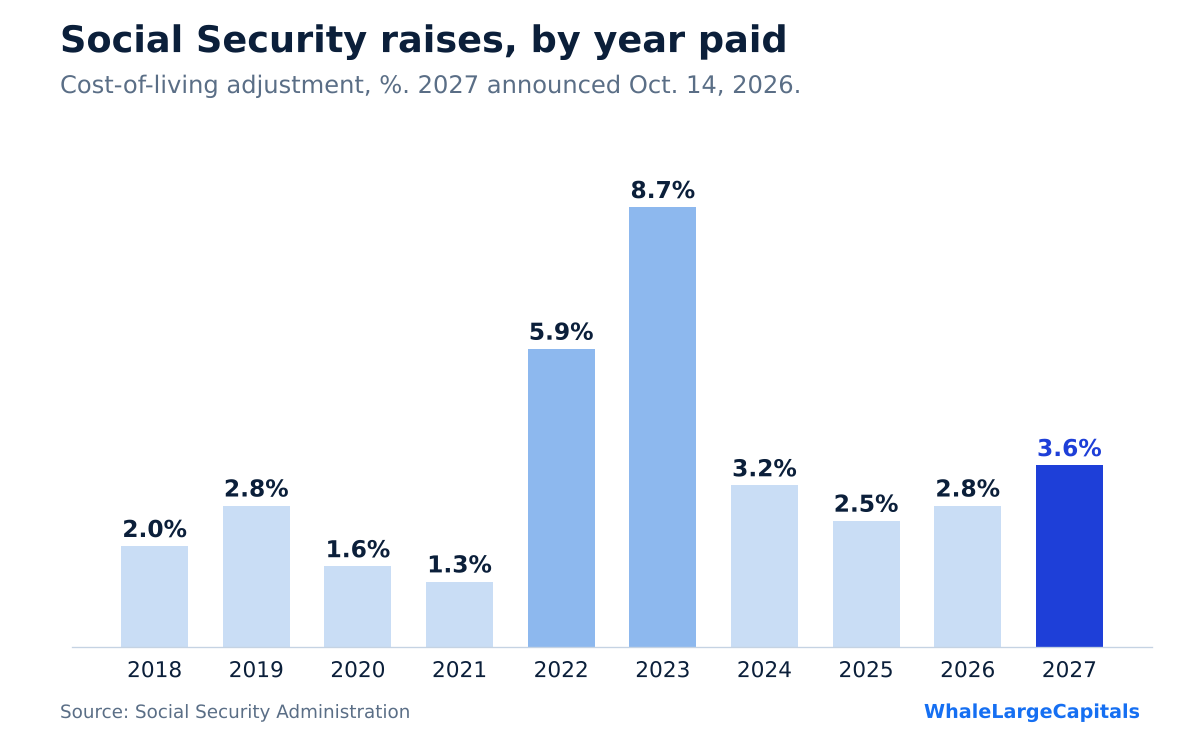
The lag has a cost. This year's 2.8% raise trailed overall inflation for seven months, CBS News reported. Prices kept climbing after the measuring window closed, and checks didn't move until the next January. | ||||||||
| ||||||||
|
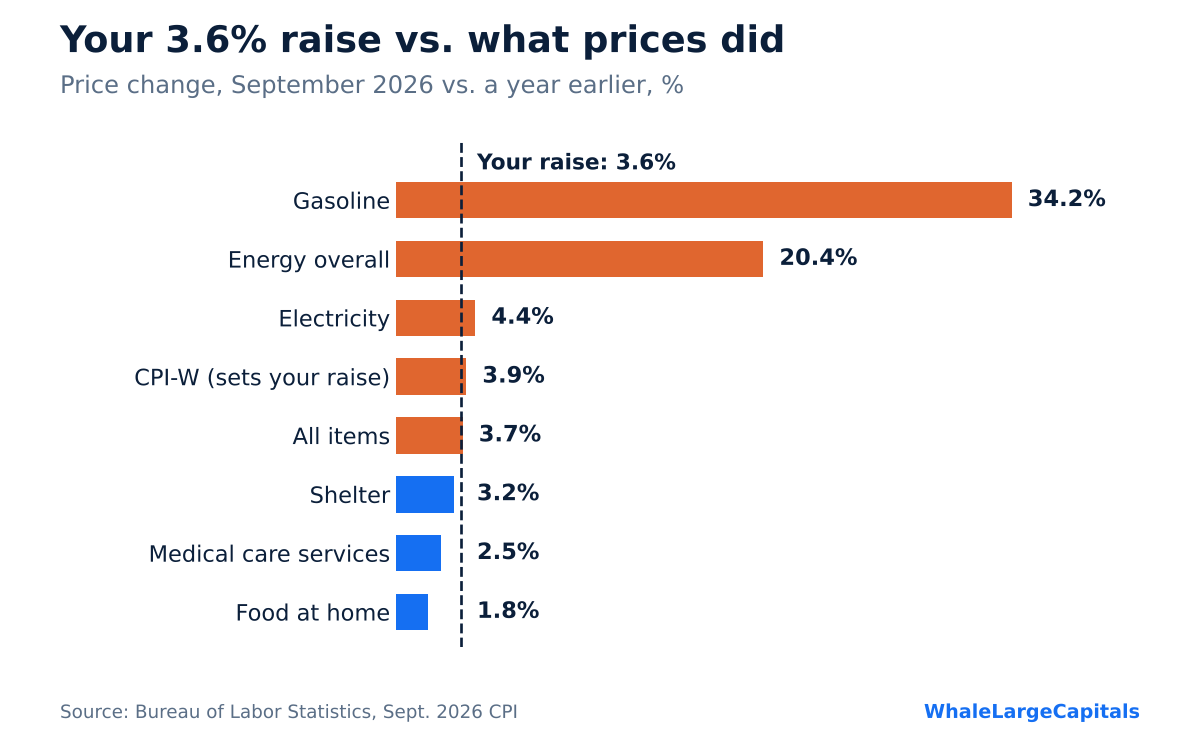
2 of 3 Your inflation isn't the averageThe 3.7% headline is an average of very different moves. September's report showed energy up 20.4% from a year earlier and gasoline up 34.2%, with gasoline alone up 9.1% in a single month. Strip out food and energy and prices rose 2.6%. Groceries rose just 1.8%. So the same raise lands very differently. A retiree who drives a lot, heats with fuel oil or lives far from town is running well behind 3.6%. A retiree who owns a paid-off home in a walkable town may be ahead. | ||||||||
| ||||||||
|
Notice the CPI-W bar. The index that sets your raise rose 3.9% in the year to September, faster than the 3.6% you'll get. The raise uses a three-month average, and prices sped up in September. That gap is the backward-looking formula at work. | ||||||||
| ||||||||
|
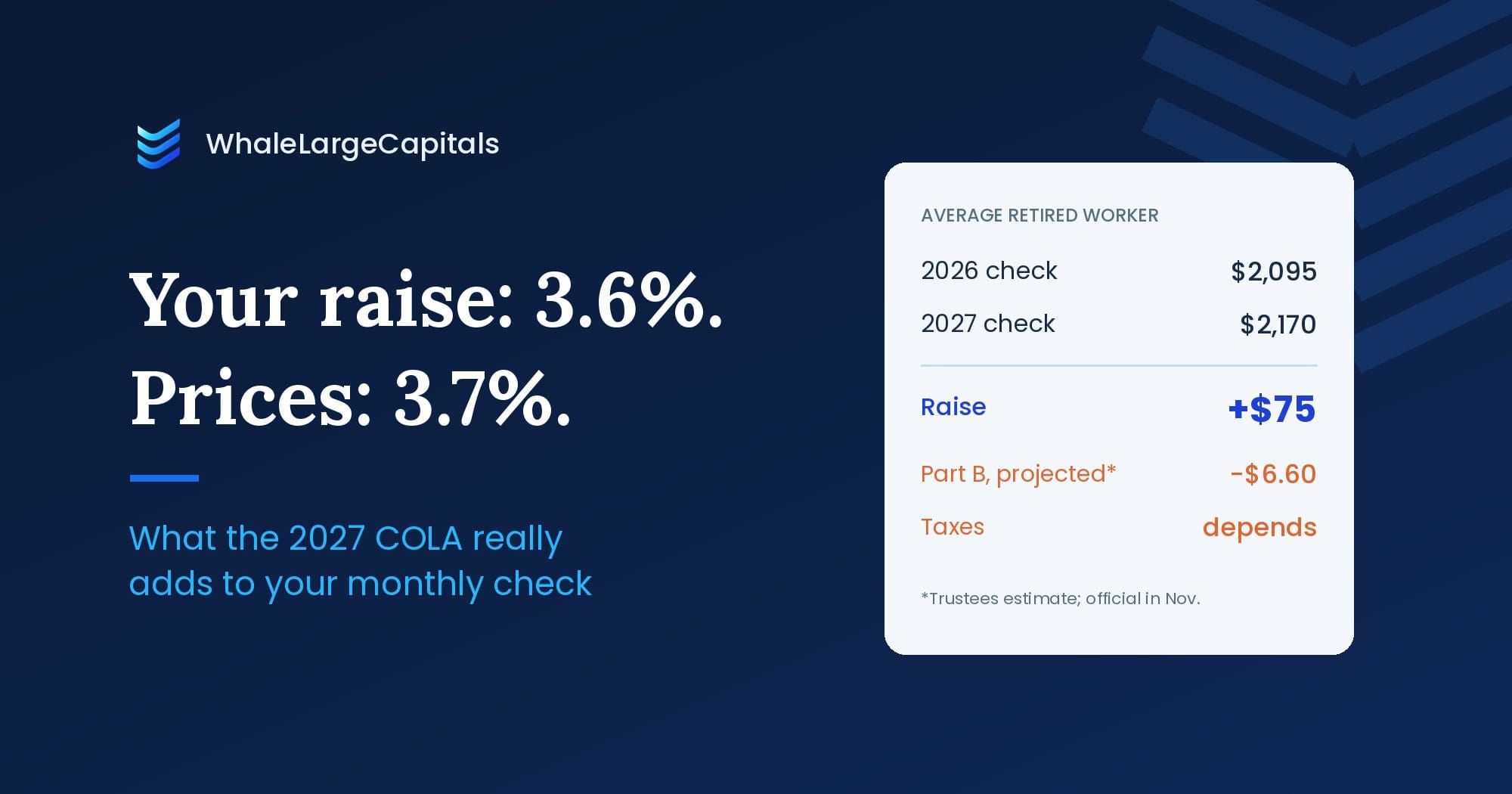
3 of 3 Who takes a slice firstTwo parties stand in line ahead of you. Medicare. For most people, the Part B premium comes straight out of the Social Security check. It's $202.90 a month this year. The Medicare trustees projected $209.50 for 2027, which would take $6.60 of the average $75 raise. That's an estimate. The official number usually comes in November. The IRS. Your benefits become taxable once your "combined income" passes $25,000 if you're single or $32,000 if you file jointly. Combined income is your adjusted gross income, plus tax-exempt interest, plus half your Social Security. Above $34,000 single and $44,000 joint, up to 85% of benefits can be taxed. Here's the part few people notice. Those thresholds were written into law in 1983 and 1993, and they have never been adjusted for inflation, according to the Congressional Research Service. Every raise lifts your benefit, but the lines stay where they are. A $900-a-year raise adds $450 to your combined income. Year after year, more retirees cross those lines without earning a dollar more in real terms. | ||||||||
Test yourself: who moved up the line?The same 3.6% raise is a gain for some households and a loss for others.
| ||||||||
The Protocol
Four moves to make this week
| ||||||||
| ||||||||
The Boardroom
A question I get a lot: if prices keep rising, will my raise go up mid-year?No. The adjustment happens once a year, on a fixed formula, and the 3.6% is set for all of 2027. Next year's raise will be measured on July through September of 2027 and paid in January 2028. That's why the cushion has to come from you, not from Washington. Keep a year of expected expenses beyond Social Security in cash or short-term Treasuries, so a bad stretch at the pump doesn't force you to sell anything at the wrong time. Social Security catches up with inflation eventually. Your budget has to carry you until it does. | ||||||||
|
That's it for this morning. When your new benefit shows up in late November, subtract the Part B premium before you spend a dollar of the raise. The number left over is your real raise. Paul Haull |