Your bond fund may be lending to the AI boom
| ||||||||
| ||||||||
Morning briefing
The AI boom runs on borrowed money. Know your place in line.By Paul Haull. 6-minute read. | ||||||||
|
Good morning. Most of what you hear about artificial intelligence is about stocks. But the data centers behind the boom are being built largely with debt, and last week the bond market started to flinch. You may not own a single AI stock and still be one of the lenders. This morning I'll show you the line that decides who gets paid when a borrower stumbles, and how to find out where you're standing in it. | ||||||||
| ||||||||
|
1 of 3 Lenders and owners play different gamesA shareholder owns a slice of the company. If the business takes off, there's no ceiling on what the slice can be worth. A bondholder is a lender. The best case is getting the interest and the money back. Nothing more. That's why lenders get nervous first. A Columbia Business School professor put it plainly to Forbes: "Bond investors don't benefit from the upside. They only worry about the downside." When the bond market starts demanding much higher rates from a borrower, it's telling you something the stock chart might not. | ||||||||
| ||||||||
|
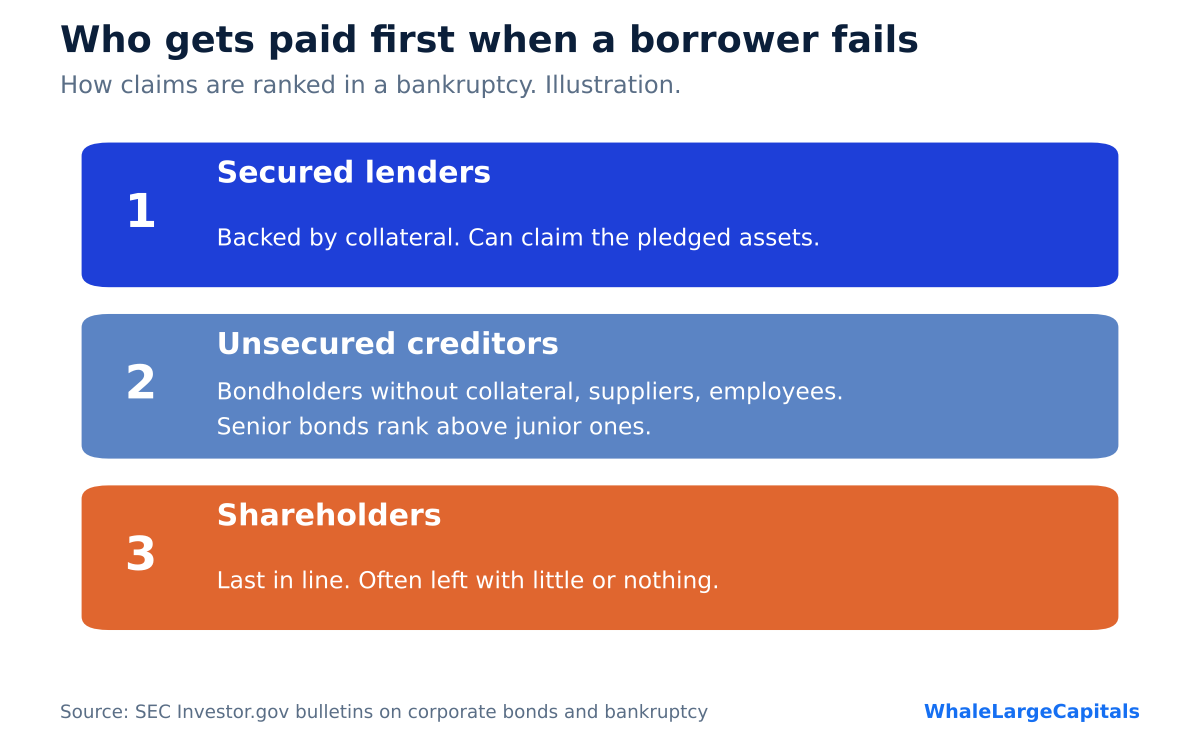
This is the real "line" in finance. Your position in it is set the day you buy, in the fine print of the security. It doesn't change when the headlines do. | ||||||||
| ||||||||
|
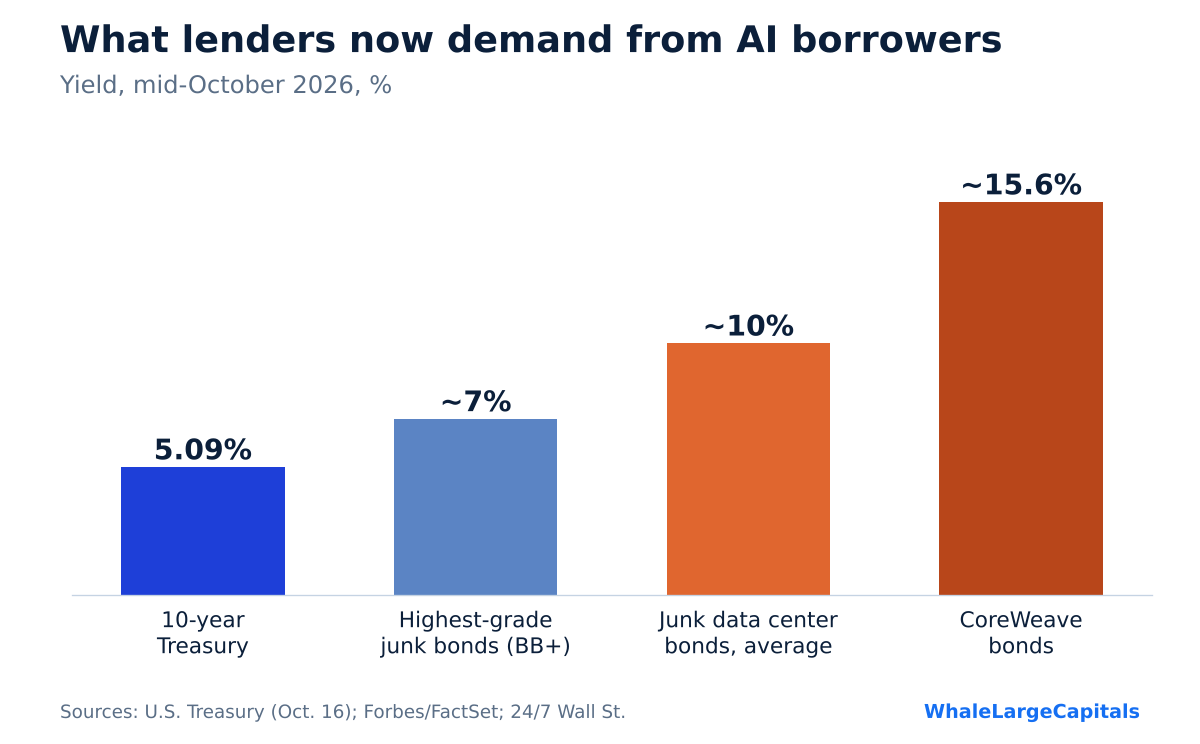
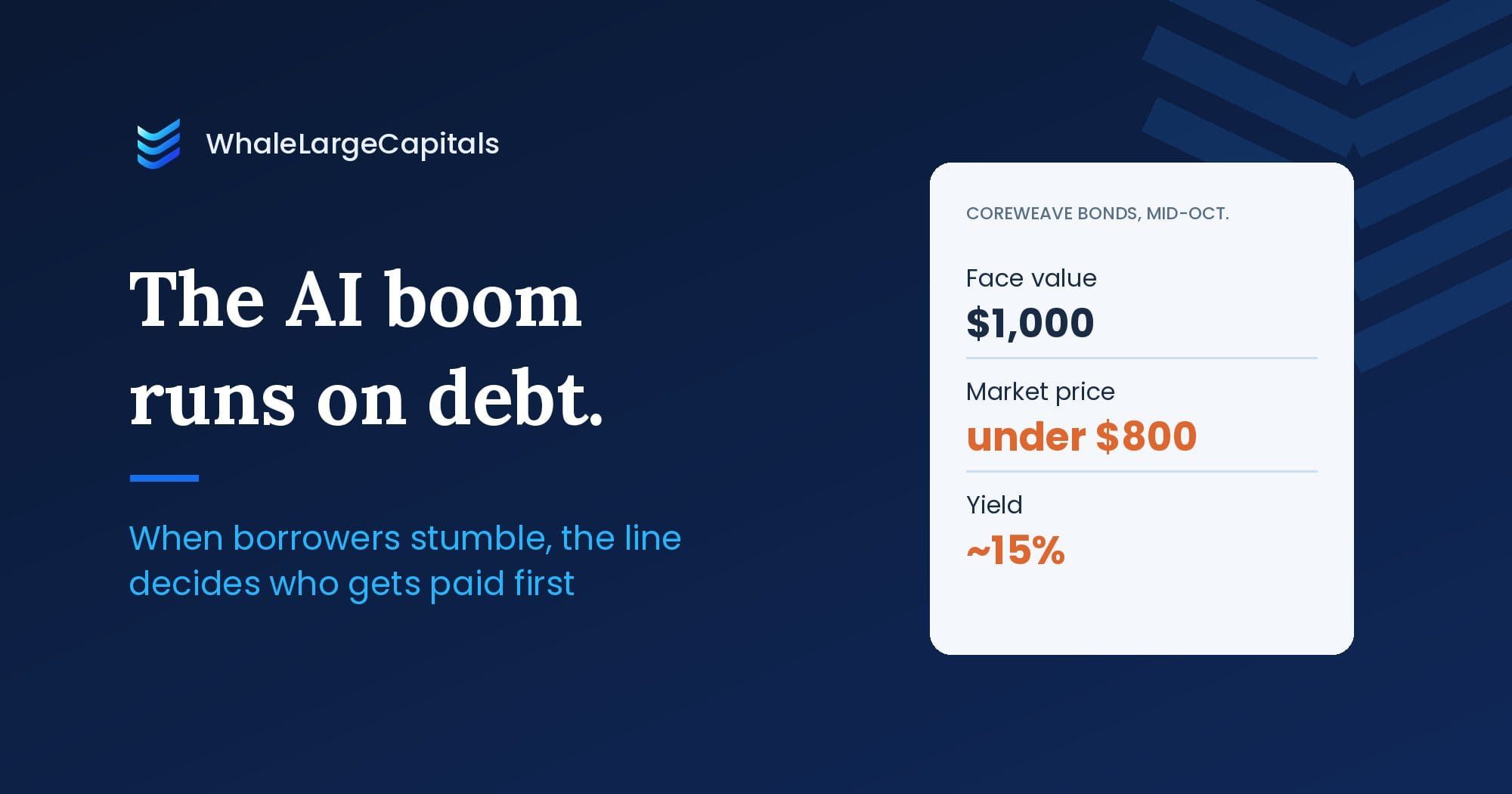
2 of 3 A yield is a price tag on riskThe quickest way to read the bond market is to compare what different borrowers must pay. The U.S. government pays about 5.1% for ten years. The safest junk-rated companies pay about 7%. Junk-rated data center bonds averaged nearly 10% last week. CoreWeave's bonds yielded around 15%. A bond trading below 80 cents on the dollar means buyers aren't sure they'll get the full $1,000 back. A 15% yield isn't a reward. It's the market saying it thinks there's a real chance it won't be paid. | ||||||||
| ||||||||
|
The stress isn't limited to small names. Forbes reported that a $27 billion bond tied to Meta's Hyperion data center in Louisiana fell to 91 cents on the dollar, and that debt financing an Oracle data center project is trading at stressed levels. The companies behind these projects are some of the strongest in the world. The projects themselves are newer and riskier. | ||||||||
| ||||||||
|
3 of 3 Where you might already be a lenderFew retirees buy a CoreWeave bond on purpose. The exposure comes through funds. Core bond index funds usually track the Bloomberg U.S. Aggregate index, which covers investment-grade bonds only. They don't hold junk, but they do hold bonds from the big technology companies borrowing to build AI. High-yield and "income" funds are where the junk lives. A fund advertising a yield well above Treasuries is getting it from somewhere, and data center junk bond sales this year are more than four times last year's total, by Forbes's count. Private credit funds are lending to the same projects outside the public market. Forbes noted that Oracle's stressed data center debt was financed with Blue Owl Capital. If you own a private credit fund or a business development company, ask what it holds. | ||||||||
Test yourself: who moved up the line?When credit tightens, position matters more than promises.
| ||||||||
The Protocol
Four moves to make this week
| ||||||||
| ||||||||
The Boardroom
A question I get a lot: isn't a 15% yield a bargain?Sometimes. If the company pays in full, a bond bought at 80 cents does very well. But that yield only shows up if everything goes right. If the company fails, an unsecured bondholder gets whatever is left after the secured lenders are paid, which can be far less than 80 cents. Distressed bonds are a specialist's game. The people who do it well read the bond documents, know where the collateral sits and can afford to be wrong. For money you're living on, the right question isn't "how much does it pay?" It's "who gets paid before me?" | ||||||||
|
That's it for this morning. This week, pull up the fact sheet of every bond fund you own and find the credit quality table. It's one page, and it tells you where you stand in line. Paul Haull |